
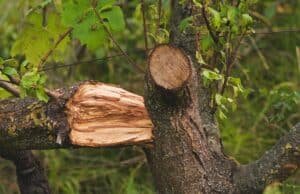
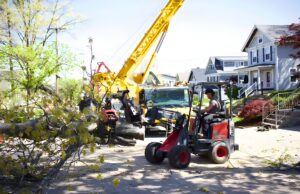
If a recent storm has left you staring at a damaged or leaning tree, you’re probably stressed, overwhelmed, and worried about choosing the wrong company in the rush to get things cleaned up. But you should be cautious. Storm chasers capitalize on panic, offering fast fixes, demanding large deposits, and disappearing before the work is done – or done safely.
We’ll help show you exactly how to protect yourself after a storm, verify that a company is legitimate, recognize red flags, and confidently hire a reputable Cincinnati tree service – even when dozens of trucks show up offering “help” you’re not sure you can trust.
Key Takeaways
- If a tree is touching power lines or creating an immediate hazard, call emergency services first – tree companies can only step in once the site is safe.
- Ohio doesn’t license tree service companies, meaning homeowners must verify Ohio BWC coverage, liability insurance, and ISA Certified Arborist credentials to avoid scams.
- Storm chasers often appear right after severe weather, using pressure tactics, large deposits, and too-good-to-be-true promises to take advantage of stressed homeowners.
- Legitimate Cincinnati tree services will provide written estimates, verifiable credentials, and realistic scheduling rather than same-day door-to-door offers.
- Professional storm-damage cleanup protects your property and your insurance claim, making it essential to hire a trusted local company rather than the first crew that shows up.

Who to Call After Storm Damage: Emergency Services vs. Lefke Tree Experts
When a storm hits, the fastest way to stay safe is knowing who to call first. Some situations require emergency response, while others simply need professional cleanup. Here’s the difference.
Call Emergency Services First for Any Dangerous Situation
If a tree has created an immediate safety risk, call emergency services first. This includes 911 or Duke Energy if:
- A tree branch is touching power lines
- Power lines are down in your yard, street, or driveway
- A tree has fallen on your house, garage, or blocks a roadway
- You see sparking, arcing, smoke, or burning smells
- A tree is leaning on or pulling electrical wires
- You’re unsure whether the area is electrically safe.
Emergency responders and utility crews must make the site safe before any tree service can begin cleanup. This protects you, your home, and the crew who will eventually remove the debris.
Call Lefke for Storm-Damage Cleanup After the Site Is Safe
Once emergency personnel or Duke Energy have secured the area and confirmed there’s no electrical or structural danger, call Lefke for non-emergency storm-damage cleanup, such as:
- Trees or large branches that fell in your yard
- Limbs blocking your driveway or walkways
- Partially uprooted or leaning trees (not touching utilities)
- Storm-damaged trees on fences, sheds, playsets, or non-electrical structures
- Cutting up and removing debris left behind by utility crews
- Stump grinding after storm-related removals
Why Choosing a Legitimate Tree Service Is Harder in Ohio
Ohio doesn’t require tree service companies to hold a state license, making them one of the least-regulated contractor types in the state. Unlike plumbers, electricians, or HVAC contractors, tree companies don’t need a state-issued credential, a licensing exam, or minimum training. Anyone with a chainsaw and a truck can call themselves a “tree service,” which becomes a major problem right after a storm.
What This Means for Cincinnati Homeowners
This regulatory gap puts the entire burden of verification on you as the homeowner. When storm chasers flood Cincinnati after severe weather, they’re counting on you not knowing what credentials to check.
Since Ohio doesn’t require licensing, these three credentials are your only protection:
1. Ohio Bureau of Workers’ Compensation (BWC) Coverage
Here’s something most homeowners don’t know: Ohio requires every employer to carry workers’ compensation through the state BWC system – no exceptions, no private alternatives. This protects you from liability if a worker is injured on your property.
Why does this matter after a storm? Storm chasers often claim they’re “independent contractors” who don’t need BWC coverage. That’s a lie – or they’re working illegally. Either way, if someone falls from your tree and gets hurt, you’re liable for medical bills that could reach hundreds of thousands of dollars.
Verify coverage using the company’s name or Federal Employer Identification Number (FEIN). If they can’t provide this information, walk away.
2. General Liability Insurance (Minimum $100,000)
This covers property damage to your home, vehicle, landscaping, or neighbor’s property during tree work. Cincinnati requires contractors to carry at least $100,000 in liability coverage, but reputable companies typically carry $1-2 million.
Ask for a Certificate of Insurance (COI) showing current coverage. Then call the insurance company directly to verify – storm chasers have been caught showing fake or expired certificates.
3. ISA Certified Arborist on Staff
The International Society of Arboriculture (ISA) Certified Arborist credential requires rigorous training, a comprehensive exam, and continuing education. It’s the gold standard for tree care expertise.
You can verify certification using the arborist’s name and certification number. Legitimate companies will have this information on their website, trucks, and business cards.
How Do I Spot Storm-Damage Scams in Cincinnati?
Storm-chaser scams spike after major weather events in Cincinnati, and they often follow predictable patterns. Here are the red flags to watch for:
- They show up at your door within hours of a storm, using high-pressure tactics instead of scheduled appointments or established customer relationships.
- They use temporary or untraceable business identifiers, such as magnetic door signs, generic company names, and no verifiable local address.
- They demand large deposits upfront, even though reputable companies typically take payment upon completion or require only a small deposit to secure equipment.
- They push “today only” pricing, creating artificial urgency to keep you from verifying their credentials or seeking additional estimates.
- They cannot provide local references from before the storm, which indicates they were not serving the community prior to the weather event.
- They offer to “waive your insurance deductible,” which is illegal in Ohio, because it typically involves inflating the estimate, billing your insurer for the higher amount, and pocketing the difference. This constitutes insurance fraud under Ohio law and can result in denied claims, cancelled policies, or legal consequences for both the contractor and the homeowner.
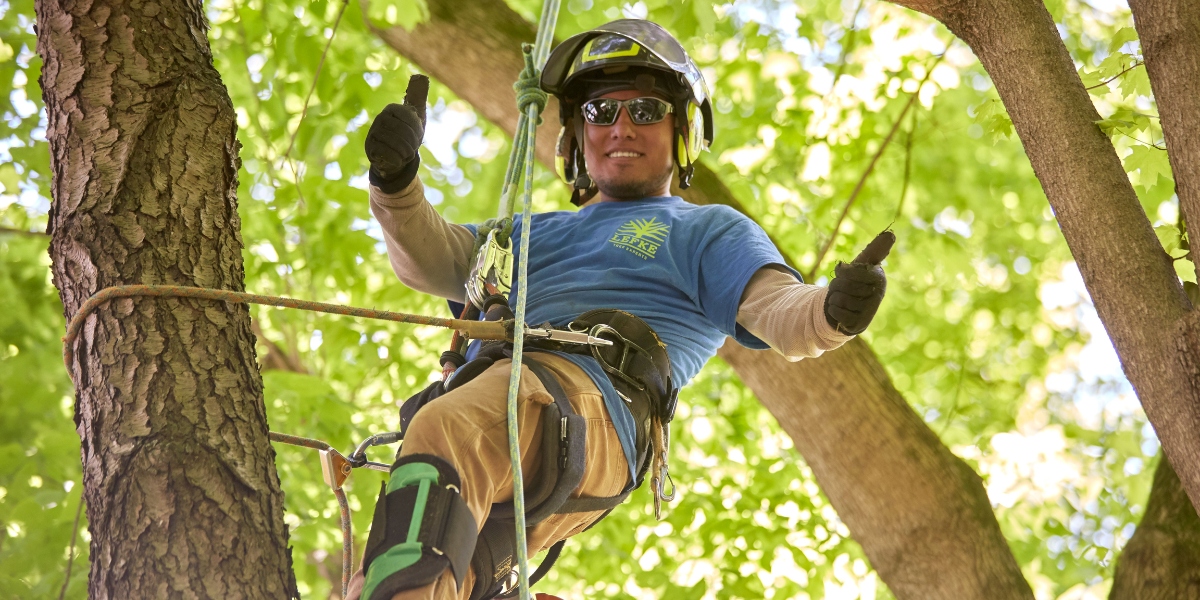
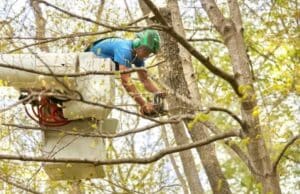
Lefke Tree Experts uses proper safety gear and techniques to handle storm-damaged trees the right way.
How Do I Verify a Tree Service Company Is Legitimate After a Storm?
To verify that a tree service is legitimate, use this checklist for every company you’re considering:
- Verify Ohio BWC Coverage: Get their FEIN and look it up yourself.
- Request Certificate of Insurance (COI): Companies must show current general liability coverage of at least $100,000 (preferably $1-2 million).
- Call the Insurance Company Directly: Don’t trust the paper; verify coverage is active.
- Verify ISA Certified Arborist Credentials: Get the arborist’s name and certification number.
- Check Physical Business Address: Drive by if possible. Look for a real office or yard, not a P.O. box.
- Review Google and BBB Ratings: Established Cincinnati tree service companies will have years of local reviews, not just post-storm activity.
- Ask for Local References: Storm chasers can’t provide pre-storm local customers.
- Get Written Estimates from Multiple Companies: Compare scope of work, not just price. The lowest bid is often the worst choice.
- Check with Ohio Attorney General’s Office: Search the company name in the AG’s consumer complaint database to see if past customers have reported scams, unresolved disputes, or fraudulent behavior.
If a company fails any of these checks, cross them off your list immediately.
Frequently Asked Questions
Will my homeowners insurance pay for tree removal after a storm?
Homeowners insurance typically pays for tree removal only if the tree caused damage to a covered structure. This means your policy will usually cover removal if the tree hits your house, garage, fence, or another insured building. Most policies include $500–$1,000 per tree for debris cleanup in these situations. However, if a tree falls in your yard without hitting anything, it’s usually not covered because it’s considered an “act of nature” with no direct property damage.
Always document the damage with photos, contact your insurance provider before cleanup begins, and keep receipts for any temporary measures (like tarping a roof) that your policy may reimburse.
How do I know if a storm-damaged tree is safe to keep or needs removal?
A storm-damaged tree needs removal if it has significant structural damage, active splitting, root failure, or poses an immediate safety risk. If the trunk is cracked, the tree is uprooted, major limbs are hanging or broken, or the tree is leaning more than before the storm, removal is usually the safest option. Trees with only minor limb loss or superficial damage can often be saved with professional pruning.
An ISA Certified Arborist can assess internal decay, root stability, and canopy structure to determine whether the tree is salvageable. When in doubt, always get a professional opinion – especially if the tree is near your home or where people spend time.
How fast should I act if a tree is leaning or damaged after a storm?
Act immediately if the tree poses a safety risk, is touching power lines, or is leaning on a structure; otherwise, you typically have 1–3 days to arrange professional help. Safety hazards, like downed lines, blocked roadways, trees on roofs, or active splitting, require emergency response from 911 or Duke Energy before any tree service can touch the site.
For trees that are damaged but not dangerous, it’s safe to take time to photograph the damage, contact your insurance, and schedule a legitimate local company. Avoid rushing into same-day agreements, which is a common tactic of storm-chasing contractors.
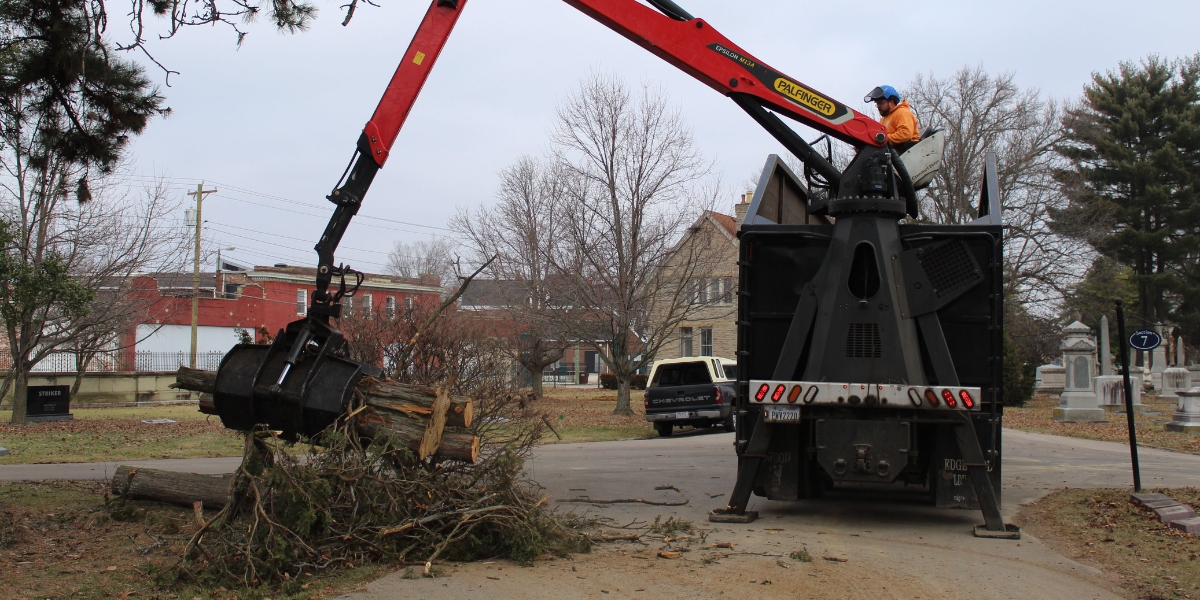
Lefke Tree Experts uses a grapple truck to remove heavy storm debris quickly and safely during cleanup operations.
Protect Your Home with a Company You Can Trust
Storm damage is overwhelming. Between the tree on your property, the insurance calls, and a parade of unfamiliar trucks offering “help,” it’s easy to feel rushed into a decision. Take a moment – you don’t have to choose the first person who shows up.
Lefke Tree Experts has served Greater Cincinnati for more than 15 years, operating from our Loveland office and supporting neighborhoods from Hyde Park to Indian Hill and Montgomery to Milford. Our reputation (and our long-standing customers) keep us busy year-round.
If you’re dealing with storm damage and want a company that values safety, honesty, and real expertise, call Lefke Tree Experts at 513-325-1783 or request an estimate online.