

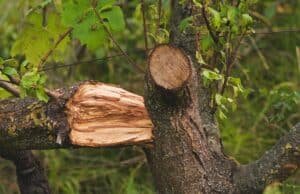
That fast-growing tree in your yard with the unusual smell could be the invasive species that’s been all over Cincinnati news lately. With Hamilton County now under spotted lanternfly quarantine, homeowners are taking a closer look at what’s growing on their properties. Tree of heaven is the pest’s preferred host, and it’s far more common in Cincinnati backyards than most people think.
That’s because this tree thrives in disturbed areas, along fence lines, and in neglected corners of yards – anywhere it can get a foothold. Here’s how to confirm whether you have tree of heaven, why removal is especially important now, and why late winter through early spring is the ideal time to act.
Key Takeaways
- Tree of heaven has compound leaves with smooth-edged leaflets (except for 1-2 small teeth at the base) and a telltale “stale peanut butter” smell when you crush the leaves or scrape the bark.
- Hamilton County is under spotted lanternfly quarantine, and Tree of heaven is the pest’s preferred host; removing it helps protect your property and your neighbors.
- Tree of heaven releases allelopathic chemicals through its roots and leaves that suppress nearby plants, actively harming your lawn, garden, and other trees.
- Late winter through early spring is the ideal removal window, before spotted lanternfly eggs hatch in April.
- DIY removal typically backfires as cutting the tree triggers aggressive root sprouting that can turn one tree into dozens scattered across your yard.
How Do You Identify Tree of Heaven in Cincinnati?
The biggest giveaway is the smell; crush a leaf or scrape the bark and you’ll notice a distinctive “burnt peanut butter” or “rancid peanuts” odor. Beyond that, look for:
- Leaves: Compound leaves (multiple leaflets on a single stem, like a feather) with 10-41 leaflets arranged in pairs, plus one leaflet at the tip.
- Leaflet Edges: Smooth margins EXCEPT for 1-2 small teeth near the base – this is the key identifier.
- Seeds: Female trees produce large clusters of twisted, papery seeds (samaras) that persist into winter.
- Bark: Pale gray with rough texture resembling cantaloupe skin on mature trees.
- Growth Rate: Extremely fast – 3-6 feet per year, with young trees sometimes reaching 10+ feet in their first season.
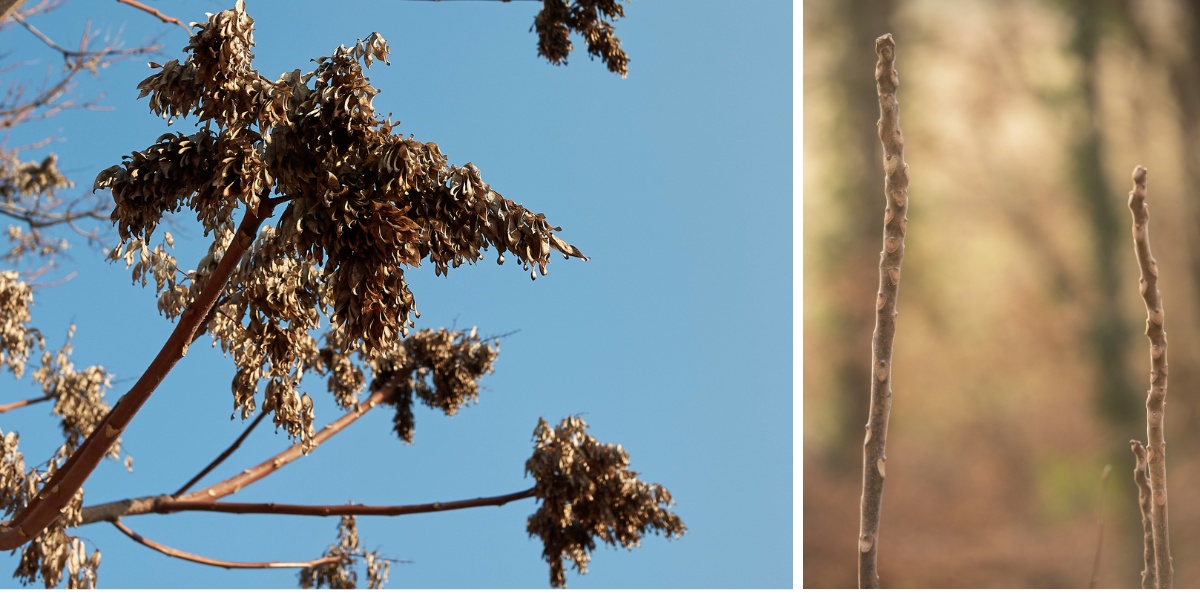
In winter, look for persistent seed clusters on female trees and distinctive large leaf scars on bare branches — two reliable identifiers when leaves are gone.
Identifying Tree of Heaven in Winter (No Leaves)
No leaves to examine? Focus on these year-round identifiers:
- Bark Scrape Test: Scratch the bark with a fingernail or pocketknife. The burnt peanut butter smell is present year-round and is your most reliable identifier throughout the seasons.
- Persistent Seed Clusters: Look for dense, drooping bunches of samaras that have turned tan or brown.
- Branch Structure: Stout, coarse branches with few fine twigs give the tree a clumsy silhouette compared to native species. The overall shape appears sparse and awkward.
- Leaf Scars: Where last year’s leaves attached, you’ll find large, heart-shaped scars — noticeably bigger than those on similar-looking native trees.
- Location Pattern: Tree of heaven favors disturbed ground — fence lines, foundation edges, neglected corners, old construction areas. A vigorous tree thriving in a spot where nothing else grows well is worth investigating.
How Do I Tell Tree of Heaven from Black Walnut and Staghorn Sumac?
Two native trees often get mistaken for tree of heaven, but they’re easy to rule out once you know what to look for:
- Black Walnut: Similar compound leaves but no unusual smell; serrated leaflet edges all the way around; produces round nuts.
- Staghorn Sumac: Fuzzy, velvety branches (tree of heaven branches are smooth); distinctive red berry clusters.
If you’re still uncertain, a professional arborist can confirm identification during a site assessment – better to verify before removal than to accidentally cut down a black walnut.
Why Is Tree of Heaven Removal Recommended in Cincinnati?
Two problems make tree of heaven a removal priority: it hosts an invasive pest that’s now established locally, and it chemically suppresses everything growing near it.
Tree of Heaven Is Primary Host for Spotted Lanternfly
Spotted lanternfly is here in Cincinnati. In fact, Hamilton County has been under quarantine since 2024, and that has now expanded to 18 Ohio counties.
Why Tree of Heaven matters for this pest:
- Preferred Host: Tree of heaven is the lanternfly’s favored plant for feeding and egg-laying, allowing populations to establish and grow rapidly.
- Economic Threat: Spotted lanternfly feeding damages grapevines, putting Ohio’s $6.6 billion grape and wine industry at risk, along with backyard fruit trees and ornamentals.
- Annual Life Cycle: Egg masses laid on tree of heaven in fall survive the winter and hatch in April and May, restarting the infestation each spring.
Removing tree of heaven eliminates a key host, reducing lanternfly numbers on your property and limiting spread to nearby areas.
Tree of Heaven’s Allelopathic Suppression of Nearby Plants
Tree of heaven produces allelopathic compounds – chemicals released through roots, bark, and fallen leaves that inhibit surrounding plants. These compounds can persist in the soil, making it difficult for grass, flowers, and other trees to establish nearby.
If your lawn, garden beds, or other trees near tree of heaven seem to struggle, they’re likely being chemically suppressed. The tree also competes aggressively for water and sunlight. Removing it gives your desirable plants a chance to thrive.
Tree of heaven doesn’t just take up space – it poisons the ground around it while creating ideal conditions for spotted lanternfly.

Professional removal with proper equipment ensures the root system is addressed — preventing the aggressive sprouting that makes DIY removal backfire.
When Is the Best Time to Remove Tree of Heaven in Ohio?
Late winter through early spring – February through April in the Cincinnati area – is the ideal removal window. This timing works for several reasons:
- Catches the tree before its aggressive spring growth surge
- Destroys any spotted lanternfly egg masses before they hatch (typically April/May)
- Frozen or firm ground means less lawn damage from equipment
- Professional crews can address the root system to prevent sprouting
Late winter is an excellent time to schedule an assessment. Tree removal during the winter offers advantages beyond just tree of heaven; it’s often the ideal season for any tree work on your Cincinnati property.
How Can DIY Removal of Tree of Heaven Make Infestations Worse?
Cutting tree of heaven without properly treating the root system triggers aggressive sprouting that turns one tree into dozens.
Here’s what happens:
- Tree of heaven roots can extend 50+ feet from the trunk
- Cutting signals damage, and the tree responds by sending up root suckers
- One tree becomes 10, 20, or 30+ sprouts scattered across your yard
- Sprouts emerge in flower beds, along fence lines, in your lawn — even in neighbors’ yards
Each time you cut the sprouts, the root system sends up more. Some homeowners cut sprouts for years without eliminating the problem.
Effective removal requires killing the root system through herbicide treatment before or during removal. This is why professional removal is worth the investment – one thorough treatment prevents years of fighting an ever-expanding problem.
Will Tree of Heaven Come Back After Removal?
With proper herbicide treatment, the root system dies over 1-2 growing seasons. Some sprouting in the first spring is normal – these shoots will be weaker than the original tree and typically decline as the treated roots fail.
Monitor the area for 2 full growing seasons. A few scattered sprouts are expected; however, vigorous resprouting across a wide area may indicate the root system needs follow-up treatment. Contact a professional arborist if new growth continues aggressively into the second year or appears more than 20-30 feet from the original trunk.
Frequently Asked Questions About Tree of Heaven in Cincinnati
Is tree of heaven toxic to touch or poisonous to humans?
While not explicitly poisonous, tree of heaven can cause skin irritation similar to poison ivy, though typically milder. The sap and crushed leaves are the main culprits. Wear gloves when handling any part of the tree, and wash skin promptly with soap and water if you come into contact with the sap.
How did tree of heaven become invasive in Ohio?
Tree of heaven was introduced from China in the late 1700s as an ornamental and to support silk production (silkworms feed on its leaves). It escaped cultivation within decades and now grows throughout Ohio, thriving in disturbed areas, vacant lots, along roadsides, and anywhere it can find a foothold.
Can tree of heaven roots damage foundations and sewer lines?
Yes. The aggressive roots exploit cracks in foundations, sidewalks, and sewer lines. If tree of heaven is growing near structures, removal sooner rather than later prevents costly damage.
Do I need a permit to remove tree of heaven in Cincinnati?
No, you don’t need a permit to remove tree of heaven in Cincinnati. It’s classified as an invasive species in Ohio, so homeowners can remove it without additional approvals. The only exception is if the tree is located in a public right-of-way or on city property, in which case you’ll need to check with your municipality.
What if my neighbor has tree of heaven?
Tree of heaven roots can extend 50+ feet and send up suckers into neighboring yards. If your neighbor’s tree is the source, removing yours may only provide temporary relief. Coordinated removal with adjacent properties is more effective – and often more economical.

Schedule Your Tree of Heaven Removal with Lefke Tree Experts
With Hamilton County under spotted lanternfly quarantine, removing tree of heaven isn’t just yard maintenance – it’s helping protect your property and your neighborhood from an established pest. Late winter through early spring is the ideal window, before eggs hatch in April and the cycle continues.
Lefke Tree Experts can confirm whether that fast-growing tree is tree of heaven and remove it properly so you’re not fighting sprouts for years. Call 513-325-1783 or request a free estimate to schedule your assessment.