

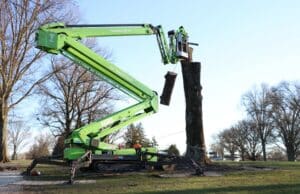
After Cincinnati’s most recent back-to-back winter storms, homeowners across communities like Hyde Park, Indian Hill, and Loveland are dealing with damaged trees. When that happens, the most important decision isn’t how fast to act, but whether a tree can be safely preserved with pruning or should be removed altogether.
Some storm-damaged trees can be safely preserved with proper pruning. Others pose ongoing risks and are better removed before they fail. The difference comes down to specific warning signs related to structure, stability, and long-term health. Understanding those warning signs helps homeowners make confident decisions, avoid unnecessary removal, and prevent small problems from becoming expensive ones.
Key Takeaways
- Trees with less than 50% crown loss can typically recover with proper pruning; beyond that threshold, survival becomes uncertain.
- Trunk cracks, sudden leans, and extensive decay are removal indicators, and these problems can’t be pruned away.
- Trees with moderate damage often fall into a “gray zone” that requires professional evaluation to determine the safest approach.
- Waiting on a hazardous tree doesn’t save money — emergency removal after failure costs far more and often comes with additional property damage.
- Professional assessment reveals hidden problems that determine whether a tree can be saved, catching issues before they become emergencies.
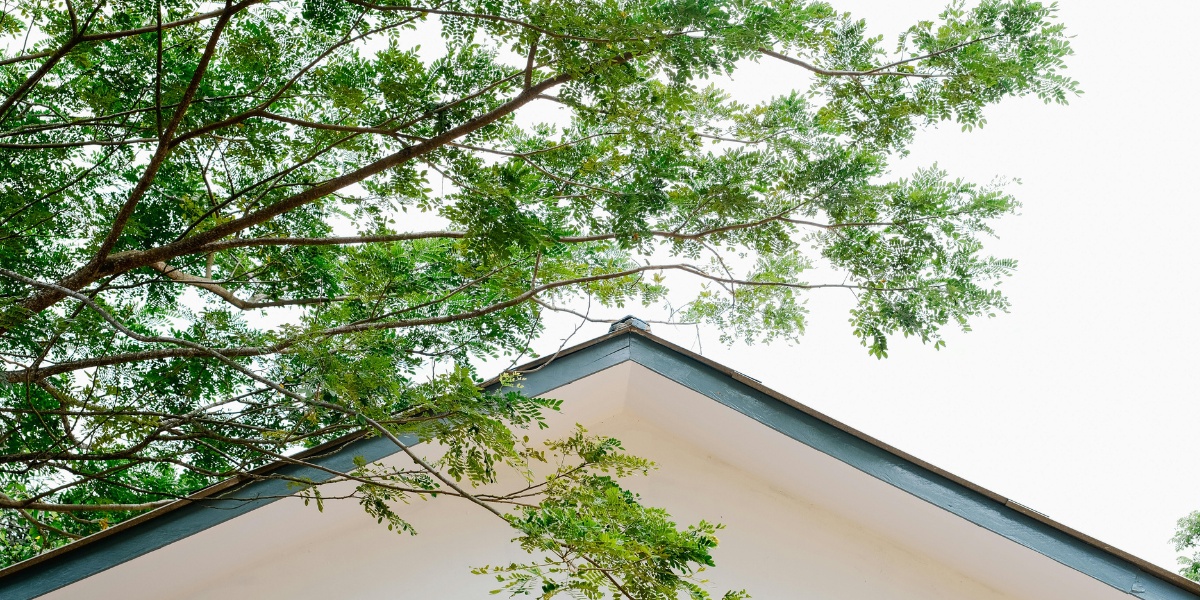
Branches overhanging your roof are prime candidates for pruning; they can damage shingles, clog gutters, and provide pest access to your home.
How Do You Know If Your Tree Just Needs Pruning?
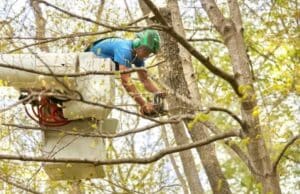
Pruning can solve the problem when damage is limited to specific branches and the tree’s core structure remains sound. If the trunk is solid, the root system is stable, and less than half the crown is affected, your tree is likely a candidate for professional pruning rather than removal.
Professional pruning is usually sufficient when the tree shows the following characteristics:
- Dead or Broken Branches Concentrated in One Area: These are not scattered throughout the entire crown; storm damage that snapped a few limbs is very different from damage that shattered half the canopy.
- Branches Hitting Your Roof, Gutters, or Siding: These create ongoing damage and access problems, and removing them doesn’t threaten the tree’s survival.
- Overgrown Limbs Blocking Views, Light, or Walkways: Reduction pruning restores clearance without compromising tree health when done correctly.
- Unbalanced or Awkward Shape: Bad cuts and strange growth patterns can often be corrected over time with proper structural pruning.
- Crossing or Rubbing Branches: These create wounds where decay organisms can enter. Removing these early prevents bigger problems later.
When Is Tree Removal the Safer Choice?
Removal becomes the responsible option when a tree’s structural integrity or health has failed beyond recovery. Some problems simply can’t be pruned away, and keeping a compromised tree standing puts your property — and potentially your neighbors’ — at risk.
Structural failure is the most urgent concern because it directly threatens safety. Watch for these warning signs:
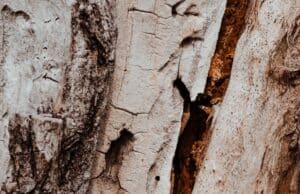
- Trunk Cracks, Splits, or Large Cavities: A crack extending deep into the trunk or a cavity covering more than a third of the circumference means the tree has lost significant load-bearing capacity. What remains may not withstand the next storm — or even a moderate wind.
- Sudden Lean Toward Structures: This is different from a tree that’s always grown at an angle. New lean indicates root failure or soil movement, and the direction of lean tells you exactly where the tree wants to fall.
- Multiple Leaders with Bark Inclusion: That tight V-shape where two main trunks meet looks solid but often contains trapped bark rather than continuous wood fibers. These junctions are prone to catastrophic splitting under wind or ice load.
- Visible Root Damage at the Base: Heaving soil and exposed or severed roots at ground level all indicate the tree’s anchor system is failing. A tree can look healthy above ground even while its foundation silently crumbles.
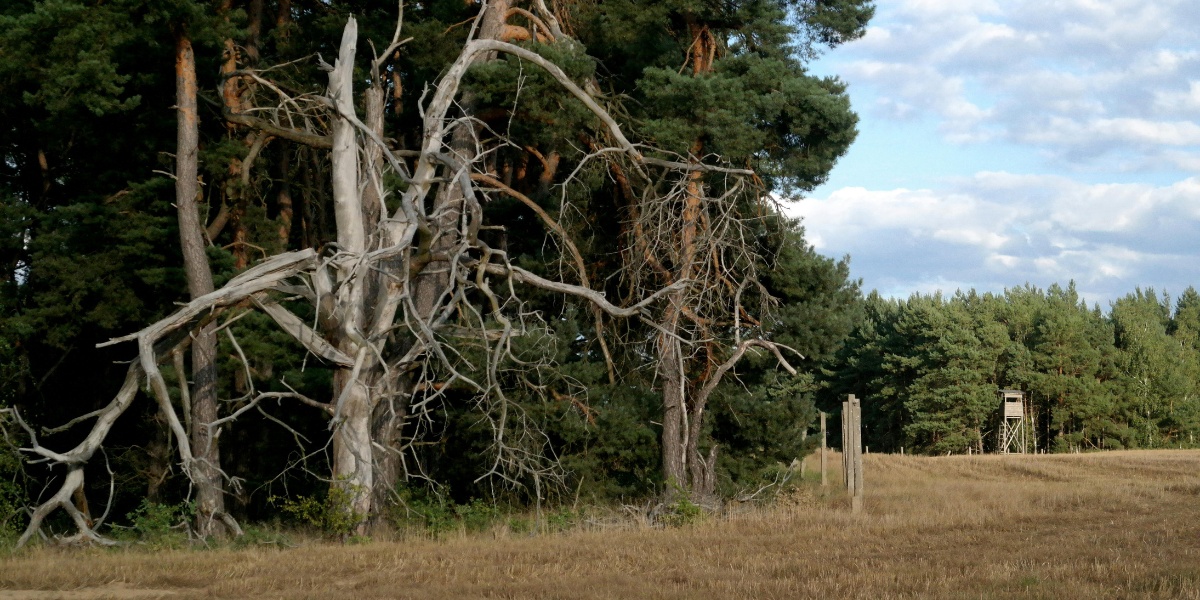
A dead tree’s brittle branches and deteriorating structure make it increasingly unpredictable — removal eliminates the hazard before failure occurs.
What Health Problems Indicate Removal Is Necessary?
While structural issues create urgent safety concerns, health decline determines whether a tree has a viable future:
- The Tree Is Dead: It shows no foliage during the growing season, has brittle branches that snap easily, and bark falling away from the trunk. Dead trees become increasingly unpredictable as decay progresses.
- Fungal Conks or Brackets Growing from the Trunk: These indicate decay that’s often far more extensive than the visible fruiting bodies suggest. By the time fungi appear externally, the internal damage is typically advanced.
- Pest or Disease Damage Affecting More Than Half the Tree: This occurs with no effective treatment available. Emerald ash borer has made this decision straightforward for thousands of ash trees across Cincinnati; once infestation reaches a certain point, the tree cannot recover.
- Extensive Canopy Dieback Progressing Over Multiple Years: This happens despite adequate water and no obvious cause. This pattern often indicates root disease or vascular problems that will continue to worsen.
When you’re seeing these signs, it’s time to discuss removal options with a qualified arborist.
What If You’re Not Sure What Your Tree Needs?
Most trees don’t fall neatly into “obviously fine” or “obviously not fine” categories. This gray zone is where many homeowners get stuck — and where professional assessment becomes essential.
Gray zone situations include:
- Storm Damage Affecting 50-75% of the Crown: The tree might recover, or it might not have enough foliage left to sustain itself.
- Structural Defects That Aren’t Immediately Dangerous: These could worsen over time — a crack that’s been there for years, a lean that seems stable, etc.
- Partial Decay: This may be contained to a small area or may extend deep into the trunk.
- Gradual Lean Developing Over Several Years: This occurs without clear explanation and is clearly getting worse.
The biggest challenge is that the most critical factors often aren’t visible from the ground. Internal decay can hollow out a trunk while the bark looks perfectly healthy. Root zone damage happens underground where you can’t see it. The structural integrity of branch unions depends on wood grain patterns hidden beneath the bark.
In some cases, alternatives like structural support systems can extend a tree’s safe life without removal. But in others, what looks like moderate damage from outside turns out to be extensive once an arborist investigates. That’s why gray zone trees need professional evaluation — the stakes are too high for guesswork.
Frequently Asked Questions About Tree Pruning vs. Removal
Can a tree with a cracked trunk be saved?
It depends on the crack’s depth and extent. Surface cracks may be cosmetic, but deep cracks extending into the heartwood compromise structural integrity. An arborist can assess whether enough sound wood remains to support the tree safely.
How long does a tree assessment take?
A typical residential assessment takes 30-60 minutes, depending on the number of trees and complexity. The arborist examines the tree, discusses your concerns, and provides recommendations—always with a written estimate.
Will removing a large tree affect my other trees?
Yes, removing a large tree can affect other trees. Trees that were sheltered may face more wind and sun exposure after a neighboring tree comes down. Some adapt well; others show stress. An arborist can assess whether remaining trees need monitoring or support.
What factors matter most when deciding between pruning and removal?
The decision comes down to structural integrity, root stability, and the percentage of the canopy affected. If the trunk and roots are sound and damage is limited to specific branches, pruning is often effective. When damage compromises the tree’s ability to support itself safely, removal becomes the responsible option.
Can a storm-damaged tree look fine but still be unsafe?
Yes, a storm-damaged tree that looks fine can still be unsafe. Some of the most serious problems — internal decay, root damage, and weak branch attachments — aren’t visible from the ground. A tree can leaf out normally while losing structural strength internally, which is why professional assessment matters after major storms.
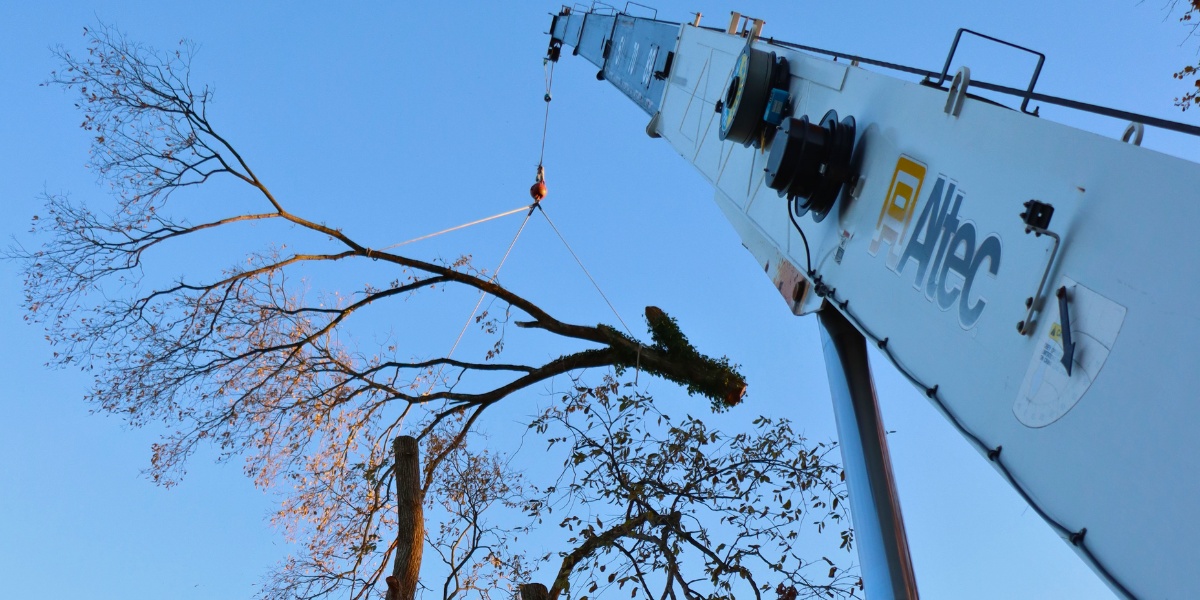
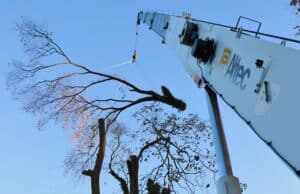
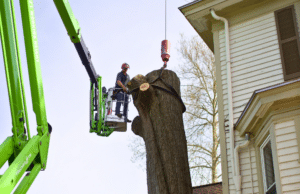
Crane-assisted removal allows arborists to safely extract large limbs and trunk sections from trees that are too compromised for climbing or in tight spaces near structures.
Let Lefke Tree Experts Help You Make the Right Call Before Spring Storms Arrive
That crack you’ve been watching hasn’t gotten smaller, the lean won’t correct itself, and those broken branches can’t reattach. The tree removal vs pruning decision ultimately comes down to what can be fixed and what can’t; and knowing the difference before the next storm makes it for you.
At Lefke Tree Experts, our ISA Certified Arborists have spent over 15 years assessing Cincinnati’s trees. We have the local knowledge, years of experience, specialized equipment to tackle all sorts of difficult projects, and we’re fully insured for your protection. Whether you need pruning or removal, we’ll give you a straight answer and a clear plan forward.
Call us at 513-325-1783 or request an estimate online.