
If you’re looking at a tree on your property and thinking, “This doesn’t look easy,” you’re probably right. Certain tree removals require specialized equipment and a higher level of planning to handle safely. Instead of taking risks or settling for a company that isn’t equipped for the job, it’s important to understand when a more advanced approach is needed. These are the scenarios where advanced equipment and a highly skilled crew are critical.
Key Takeaways
- If multiple tree companies refuse your job or won’t return your call, it usually means the job requires specialized equipment they don’t have — not that your tree can’t be removed.
- The 5 most common specialist-level scenarios involve extreme height near structures, no-access backyards, storm-damaged trees, multi-trunk removals, and trees surrounded by utilities.
- Companies that own cranes and grapple saws can handle jobs that climbers simply cannot do safely.
- A higher quote from a specialized company often reflects hundreds of thousands of dollars in equipment investment, not a markup on the same service.
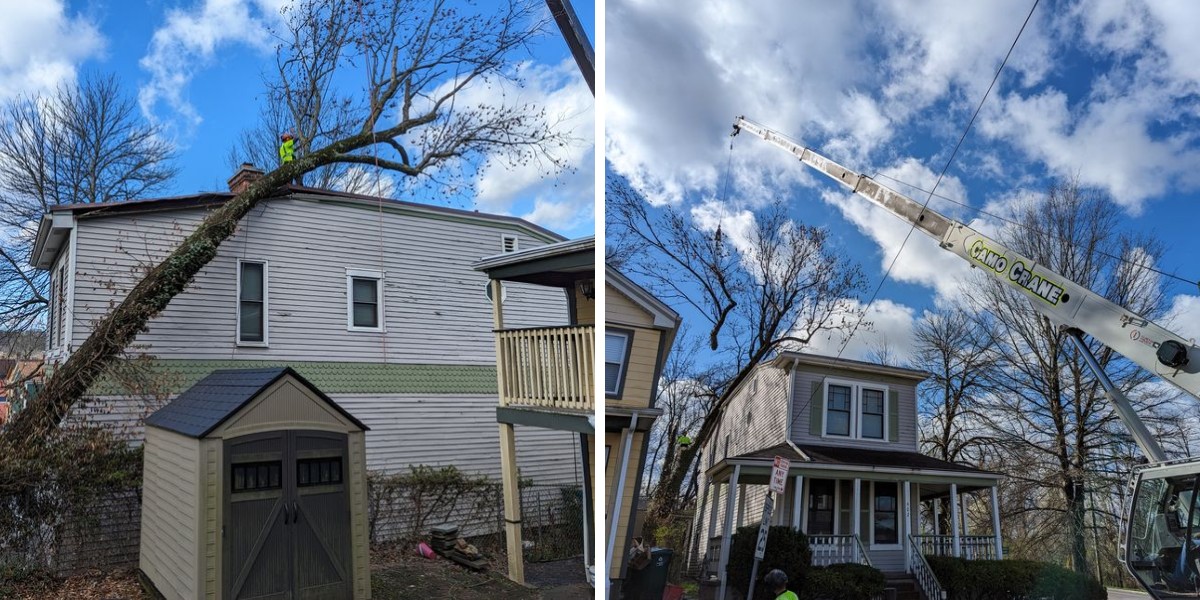
A tree that’s fallen onto a home with no backyard access is exactly the kind of job most companies turn down. A crane set up on the street can reach over the house and remove it without causing additional damage.
Why Won’t Some Tree Companies Take Certain Jobs?
Some tree companies pass because they can’t do the job safely with the equipment they have. A typical crew operates with climbers, a chipper, and maybe a bucket truck. That setup handles the majority of residential tree removal jobs just fine.
But some jobs demand equipment that costs hundreds of thousands of dollars, specialized training, and significantly higher insurance coverage. Companies without those things have two honest options: tell you upfront, or take on risk they shouldn’t. The good ones tell you. The rest just stop answering the phone.
4 Tree Removal Jobs That Require Specialized Equipment
These situations consistently require equipment and expertise beyond what most tree companies can provide — and they’re more common in Cincinnati than you might think.
#1: Trees Over 70 Feet Tall Near Structures
When a mature tree towers over your house with only 10 or 15 feet of clearance, traditional felling isn’t an option — there’s simply nowhere for that tree to go. Cincinnati is full of oaks, sycamores, and tulip poplars that reach 80 to 100 feet, especially in established neighborhoods like Indian Hill, Hyde Park, and Mt. Lookout.
A climber can section a tree from the top down, but above 70 feet near a structure, the margin for error on every cut shrinks to inches; one misjudged limb can go through a roof.
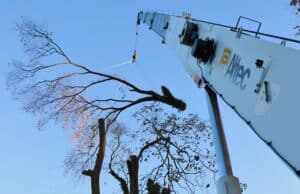
A crane changes the equation by lifting each section up and away from the structure under full control, rather than relying on gravity and rigging alone — it’s one of the main reasons we use cranes for tree removal on so many jobs.
#2: Backyard Trees with No Equipment Access
This is one of the most common reasons homeowners hear “we can’t do that.” The tree is in the backyard with a house on one side, a fence on the other, and no way to drive equipment next to it. If you live in Pleasant Ridge, Oakley, or Madisonville, you know exactly what tight lots look like.
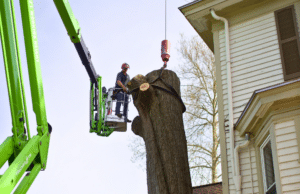
And without ground access, there’s no safe way to rig heavy sections of wood down, meaning that pieces would have to go over the house, not around it. That’s where a crane makes a huge difference. It sets up on the street, reaches over the home, grabs each section, and lifts it out cleanly. The tree never touches your roof, and a good crew will take extra steps to protect your property during the process.
#3: Storm-Damaged Trees That Are Too Dangerous to Climb
A half-fallen tree after a storm is one of the most dangerous situations in tree work. No responsible company will send a climber into a compromised canopy because:
- The trunk may have internal fractures that aren’t visible from the ground
- The tree can shift, roll, or collapse without warning
- Tree work already carries one of the highest fatality rates of any occupation — roughly 30 times the national average, and storm damage is a leading contributor
These trees require equipment that can dismantle them from the ground. A grapple saw — a remote-controlled hydraulic chainsaw mounted on a crane boom — can cut and hold each piece without a person anywhere near the tree. With Cincinnati’s spring severe weather and winter ice storms, this scenario comes up more often than many homeowners realize.
DID YOU KNOW?: The urgency after recent severe weather also makes storm damage a magnet for storm-damage scams, so take your time vetting any company before signing anything.
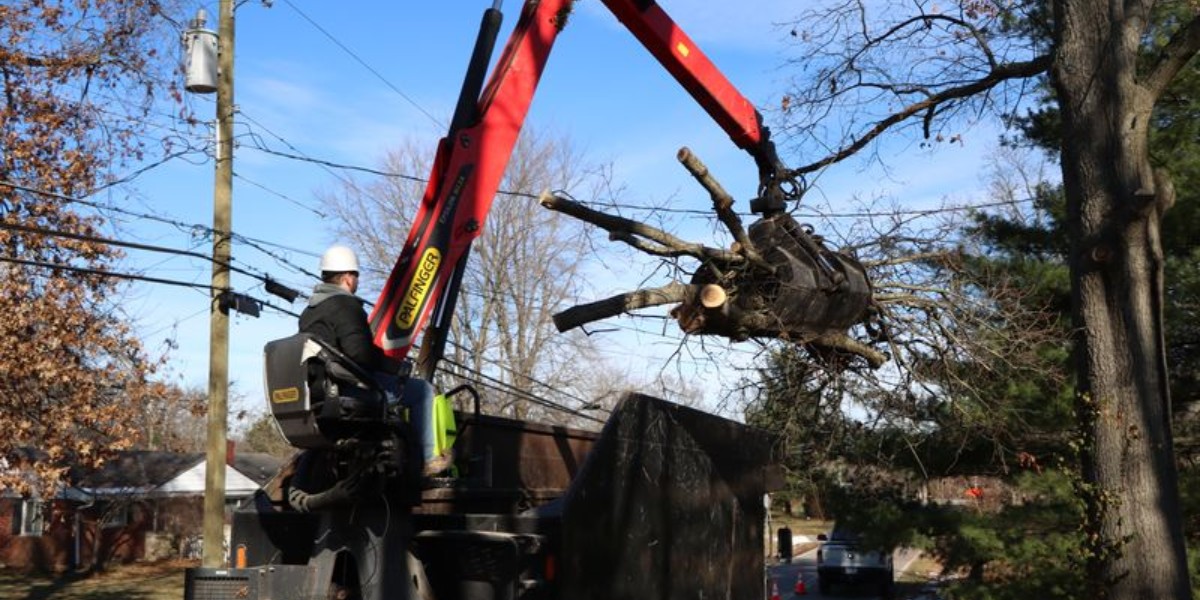
Removing trees near power lines requires precision equipment and trained operators. OSHA prohibits standard tree workers from getting within 10 feet of energized lines.
#4: Trees Surrounded by Utilities and Structures Requiring Precision Placement
When a tree is boxed in by power lines, a house, a garage, and a neighbor’s fence, every piece of wood has to land in a specific spot. There is zero tolerance for error.
Trees near power lines add a legal layer most homeowners don’t know about. OSHA prohibits workers from getting within 10 feet of overhead power lines unless they’re certified line-clearance tree trimmers working on behalf of the utility; standard tree workers can’t legally get that close, regardless of experience.
That means most tree companies will walk away from a job like this. A crane with precision placement capability is often the only way to remove these trees without anyone breaching that 10-foot boundary.
How Do You Evaluate a Tree Company for Specialized Removal?
Ask about their equipment, certifications, and insurance before signing anything. If your situation calls for a specialist, these are the questions that matter:
- Do you own your cranes, or rent them? Ownership means faster deployment, lower cost, and more hands-on experience operating them.
- Do you have a grapple saw for jobs that are too dangerous to climb?
- Are your crew members line-clearance certified for work near utilities?
- Do you carry insurance appropriate for crane operations and complex removals?
- Do you have ISA Certified Arborists on staff who assess the tree before work begins?
A company that can answer yes to all five has the capability to handle complex removals safely.
Frequently Asked Questions About Specialized Tree Removal
How long does tree removal with a crane take?
Most crane-assisted removals are completed in a single day, often in just a few hours of active cutting once the crane is positioned. Setup and stabilization typically take longer than the actual removal. Total time depends on the tree’s size, location, and the complexity of the job.
Will a crane damage my driveway or yard?
A reputable company uses ground protection mats to distribute the crane’s weight and prevent damage to driveways, sidewalks, and lawns. The crane is typically set up on the street or driveway — not in the yard. Ask your estimator about their property protection plan before work begins.
Will my homeowner’s insurance cover specialized tree removal?
Usually, insurance covers removal when a tree falls on a covered structure like your house or garage. Removing a standing tree — even a hazardous one — is typically the homeowner’s expense. Contact your insurance company directly for your specific policy details.
Can a dead tree be removed without climbing it?
Yes — and it should be. Dead trees, especially ash trees killed by emerald ash borer, are extremely brittle and unsafe to climb. A grapple saw or crane allows the tree to be dismantled from the ground without anyone entering the canopy. This is one of the main reasons dead tree removal costs more than removing a healthy tree of the same size.
Do I need a permit to remove a tree in Cincinnati?
It depends on where you live. The City of Cincinnati requires permits for removing certain trees on private property, and some municipalities in the metro area have their own ordinances. Your tree service company should be able to advise you on local requirements before work begins.
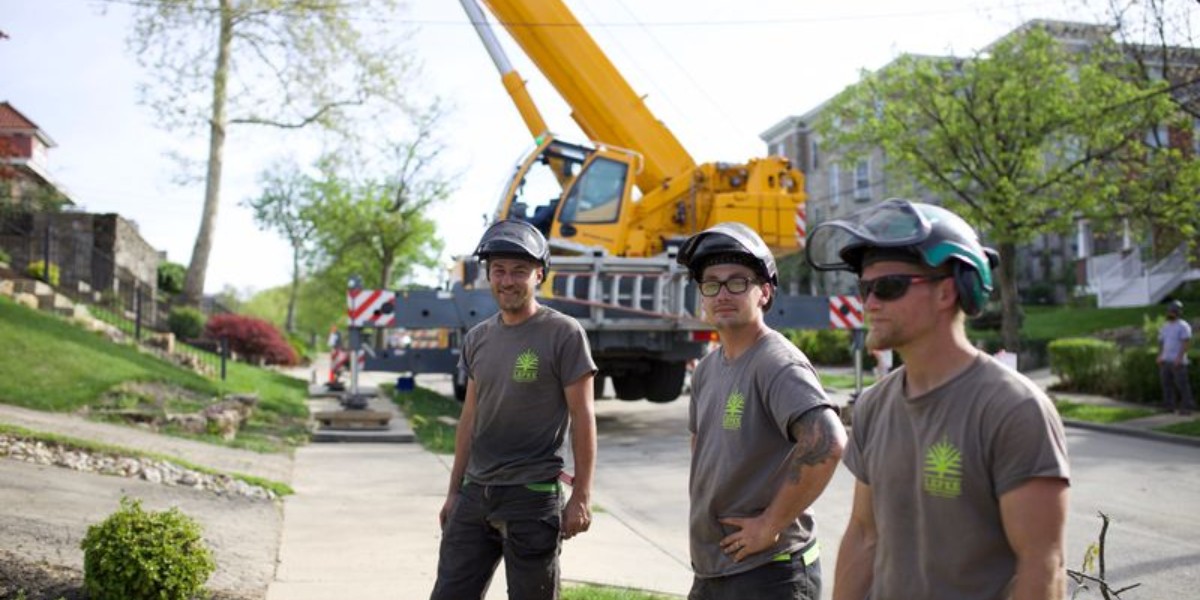
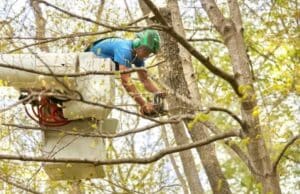
The crew and equipment behind Cincinnati’s most complex tree removals—specialized training, proper safety gear, and crane capability that most tree companies don’t have.
Get a Free Estimate for Your Complex Tree Removal from Lefke Tree Experts
The next time a tree company says no or goes quiet on you, you’ll know what’s behind it. These aren’t jobs that any crew with a truck and a chainsaw can take on — they need real equipment, real training, and the insurance to back it up.
Lefke Tree Experts owns cranes and a grapple saw, employs ISA Certified Arborists, and carries the insurance required for complex crane operations. We’ve been handling Cincinnati’s most difficult tree removals for over a decade. Call 513-325-1783 or request a free estimate and schedule your specialized tree removal today.