
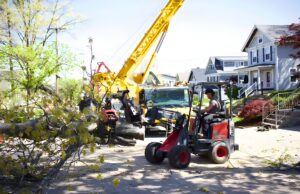
This past January the greater Cincinnati area saw 10 to 16 inches of heavy wet snow — enough to trigger a Level 3 snow emergency in Hamilton County and leave a trail of tree damage across Hyde Park, Mount Lookout, and Indian Hill.
If you’re still noticing issues with your trees months later, you’re not alone. Winter damage doesn’t just disappear in the spring. In many cases, it gets worse. As trees leaf out, added weight and new growth can quickly turn into a bigger problem by summer.
Understanding what happens inside your tree, and why the coming weeks matter, is the initial step toward protecting your trees and property.
Key Takeaways
- Trees don’t heal from storm damage — they compartmentalize it, and ragged breaks are much harder to contain than clean pruning cuts.
- Co-dominant stems and split unions often worsen over the growing season as new growth increases weight and stress, forcing the split to widen.
- A tree that is structurally compromised is much more vulnerable to secondary failure during Cincinnati’s April-June season of severe weather.
- If a tree has lost more than 50% of its crown or its central leader, removal is typically the safest option — best handled now before it becomes an emergency.
- April is the optimal window for assessment because arborists can still see branch structure clearly before the canopy fills in.
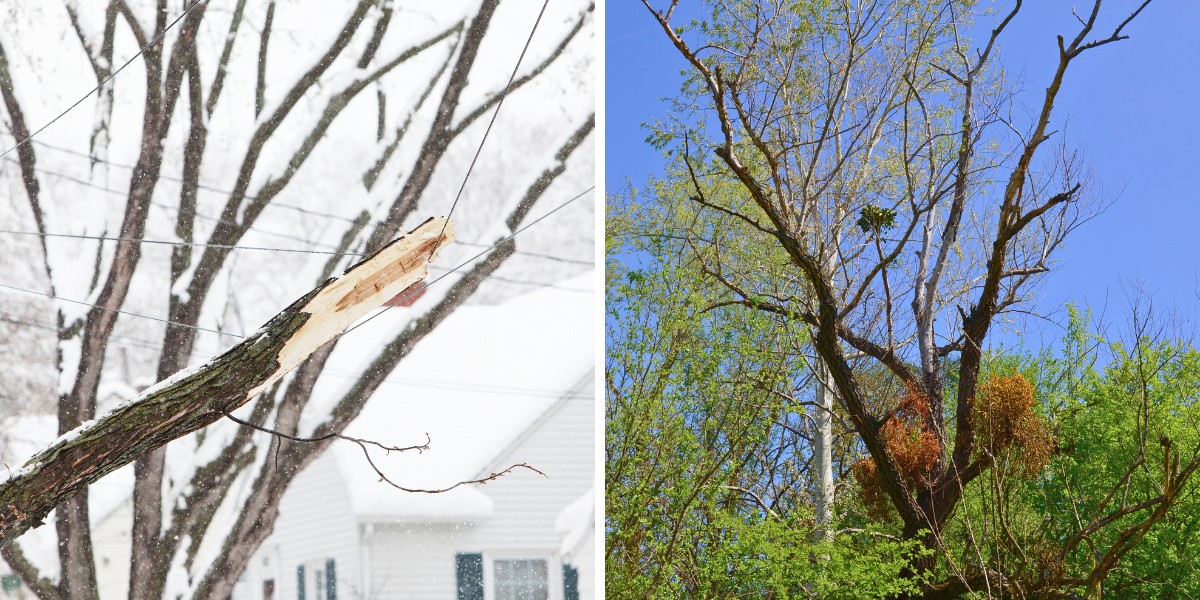
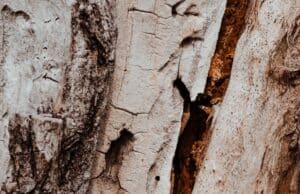
A limb broken by heavy snow (left) may look manageable in winter, but by spring the exposed wood has begun to decay and the surrounding branches show dieback (right).
What Happens to Storm-Damaged Wood During the Growing Season?
Storm-damaged wood doesn’t heal during the growing season, it begins to decay, and the tree works to contain that damage. This process is called compartmentalization, or “CODIT” (Compartmentalization of Decay in Trees). It is how trees survive injuries. Instead of regenerating damaged tissues, trees form four biological barriers around the wound to contain the decay’s spread and colonization of fungus.
According to the Morton Arboretum, this process is the tree’s only defense against wound-related decay. It works best when the surface of the wound is clean and small. A proper pruning cut just outside the branch collar gives the tree a more defined boundary to seal around.
Research from the USDA Forest Service confirms that compartmentalization is most effective when wounds are adjacent to healthy tissue, and that storm-related injuries create irregular surfaces that enable decay organisms to colonize more quickly and penetrate deeper than a clean cut would.
What this means for your tree: Leaving a partially broken or split limb in the canopy will not allow it to reattach or recover. As the branch continues to grow through spring and summer, added weight increases stress at the failed connection, making eventual failure more likely.
Why Are Split Unions and Co-Dominant Stems a Bigger Problem Than They Look?
Co-dominant stems with included bark are a bigger problem because they are some of the most common (and most underestimated) structural weaknesses in mature trees. Where two main stems grow at a narrow angle and bark gets trapped between them, there is no wood-to-wood connection holding them together. Loads of heavy, wet snow forces these unions into the shape of a wishbone that is being pulled apart.
According to a publication in Arboriculture & Urban Forestry by Bartlett Tree Research Laboratories, unions with included bark require much less force to fail. Oaks, maples, and elms, which are common across the neighborhoods in Cincinnati’s east side, commonly develop co-dominant stems, which make them especially vulnerable to this type of storm damage.
When splits are addressed in the spring, they can sometimes be managed with targeted pruning to decrease weight on the compromised side. When left through the growing season, splits have higher potential of full failure due to the added weight of seasonal foliage growth.
Cincinnati’s severe weather season runs from April through June, putting compromised trees at even greater risk of secondary failure.
How Does Spring Storm Season Make This More Urgent?
Trees with existing structural damage are much more likely to fall during Cincinnati’s season of severe weather, which is from April through June. Thunderstorms with powerful winds, heavy rain, and even hail can put a lot of stress on a tree’s canopy. One that is already weakened from winter doesn’t have the structural reserves to push through it.
This is the risk that catches homeowners off guard. Winter may have already weakened the tree’s structure, but the real problems often show up during spring storms. As the tree is pushed through another round of stress, that hidden damage can turn into a failure — sometimes all at once. Then, a would-have-been scheduled visit for pruning or tree removal becomes an emergency.
Addressing the damage now, rather than later, is safer and a lot more cost-effective than dealing with a failure after the fact. Routine pruning is one of the most effective ways to decrease a tree’s susceptibility to storm damage. For an already compromised tree, it is even more important.
How to Tell When Storm-Damaged Trees Should Be Removed
A storm-damaged tree should be removed when a tree has lost over half its canopy, its central leader, or trunk structural integrity. Many trees damaged by storms can be helped with corrective pruning that removes damaged wood and helps compartmentalize. For certain thresholds, it is suggested that removal is a safer, more practical choice, such as:
- Crown Loss Under 25-30%: Good prognosis with proper pruning
- Crown Loss Between 30-50%: Recovery is possible, but requires meticulous professional evaluation
- Crown Loss Over 50%: Poor odds for survival, but removal can be worth serious consideration
- Central Leader Lost: A major structural issue for most species
- Major Trunk Split from the Base: Typically a removal situation, especially if structural integrity is too compromised
If you aren’t sure whether your tree falls under the “removal” or “pruning” category, a professional assessment can identify the best option possible. Knowing how professionals choose between pruning and removal can also help set your expectations for that conversation.
Why Is April the Right Time to Get a Professional Assessment for Storm-Damaged Trees?
Trees across the Greater Cincinnati area are beginning to leaf out, meaning arborists are still able to see the complete structure of a branch. Hanging limbs, cracks, splits, and compromised unions are all visible without a full canopy blocking them. As the leaves fill in over the coming weeks, the window closes and structural damage becomes more difficult to spot from the ground.
Timing matters from the tree’s perspective, too. Clean pruning cuts made now give the tree a full growing season to begin compartmentalizing. From a scheduling standpoint, spring is the busiest season for tree service companies across Cincinnati. The sooner you schedule an assessment, the shorter your wait.
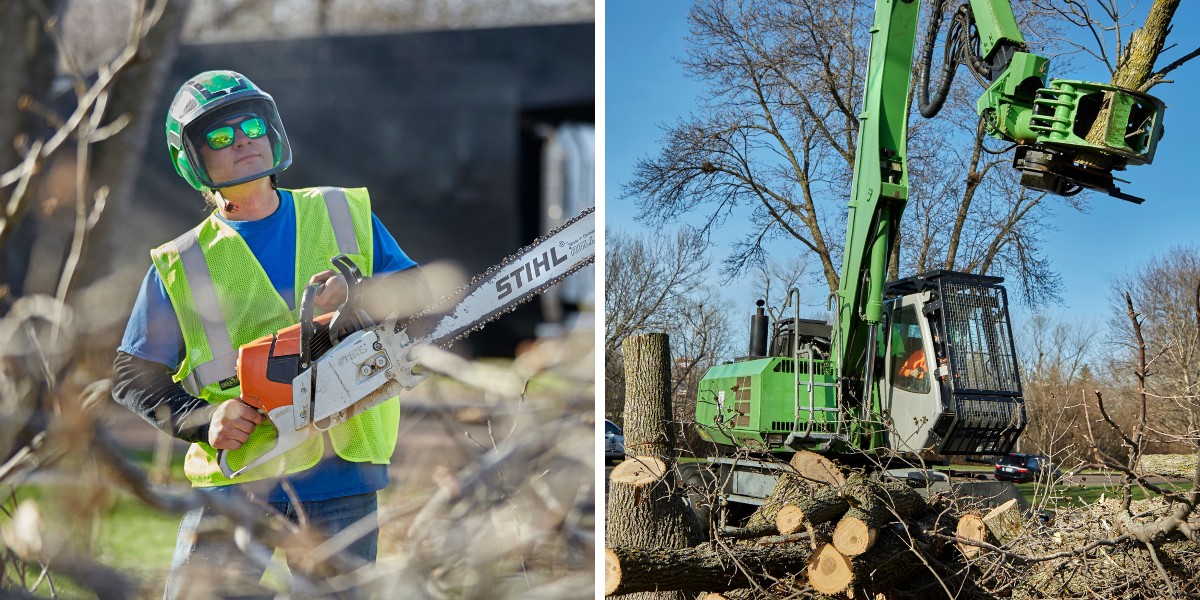
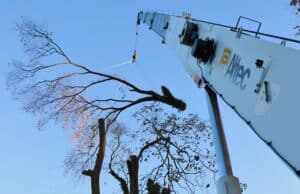
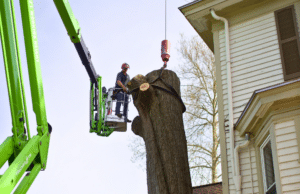
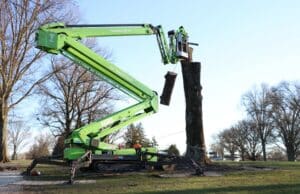
When storm damage is beyond repair, Lefke Tree Experts uses specialized equipment, including a grapple saw, to remove trees safely and efficiently.
Frequently Asked Questions About Winter Storm Tree Damage
Will a broken tree branch heal on its own?
Trees don’t heal the way skin does. They compartmentalize damage by walling off the compromised area. A ragged, storm-related break is harder to compartmentalize than a clean cut, which leaves the wound open to decay longer.
How do I know if storm damage to my tree is serious?
Look for split forks, especially where two central trunks meet, large hanging branches, torn bark that exposes bare wood, and any new lean in the trunk. If the damage involves more than a few small branches, a professional assessment is the safest way to determine the next steps.
Should I cut off broken branches myself?
If you can reach small branches from the ground without a ladder, they are usually safe to prune if you know where to cut — just outside the branch collar. Anything that needs a ladder, involves large limbs, or is near power lines should be left to a Certified Arborist to prune.
How much tree damage is too much to fix with pruning?
As a general rule of thumb, trees that have lost more than half their canopy or their main leader have poor odds for recovering. Crown loss under 30% usually responds well to corrective pruning. Loss between 30-50% calls for meticulous professional examination.
Can a tree with a split trunk be saved?
Whether or not a tree with a split trunk can be saved depends on how serious the split is and where it happened. A partial split at a co-dominant union can occasionally be managed with pruning, but it’s temporary. A tree must be braced and cabled if tree preservation is the top priority. A split that extends into the main trunk is generally a removal situation, as structural integrity is too compromised to be trusted.
How long after a storm should I have my tree inspected?
The quicker, the better. This is especially true if you see branches hanging or cracks in the structure. For Cincinnati homeowners still seeing damage from this past January’s storm, early spring is the ideal window for an in-depth evaluation.
Does homeowners insurance cover storm damage tree removal?
In most cases, homeowners insurance covers removal when a tree falls on a covered structure. Removal of a standing but damaged tree isn’t usually covered. Check with your insurance provider for the specific details of your policy.
Contact Lefke Tree Experts About Your Winter Storm Tree Damage in Cincinnati
Winter storm damage doesn’t fix itself once the weather gets warmer. The growing season puts additional stress on compromised branches, widens splits in the structure, and gives decay more time to establish itself. A tree that looks like it’s bouncing back with fresh leaves may be hiding damage that’s worsening beneath the canopy. April is the window to act, before the leaves fill in and spring storms hit — so you can schedule the work on your terms.
Lefke Tree Experts provides estimates for pruning and removal throughout Greater Cincinnati and Northern Kentucky. If your trees took some hits this winter, call 513-325-1783 or request an estimate online to schedule an evaluation before the canopy closes in.