As trees fill out for the growing season, small issues become much more noticeable. Branches that seemed harmless a few months ago are suddenly blocking windows, brushing against the roof, scraping gutters, or crowding the side yard.
Fortunately, you don’t have to choose between a tree that looks good and one that works for your property. The right pruning approach creates the clearance and safety you need while preserving the tree’s natural shape and long-term health.
Key Takeaways
- Different pruning techniques solve different problems, so the right approach depends on what you’re trying to accomplish.
- Crown thinning, crown raising, and crown reduction each address a different issue while preserving the tree’s natural shape when performed correctly.
- Crown reduction is not tree topping because it reduces the canopy by pruning back to healthy lateral branches instead of leaving stubs.
- If a tree requires removing too much of the canopy to fit its space, replacement is often a better long-term solution than repeated heavy pruning.
- An ISA Certified Arborist can determine which pruning technique is appropriate and when the work should be performed for the best results.
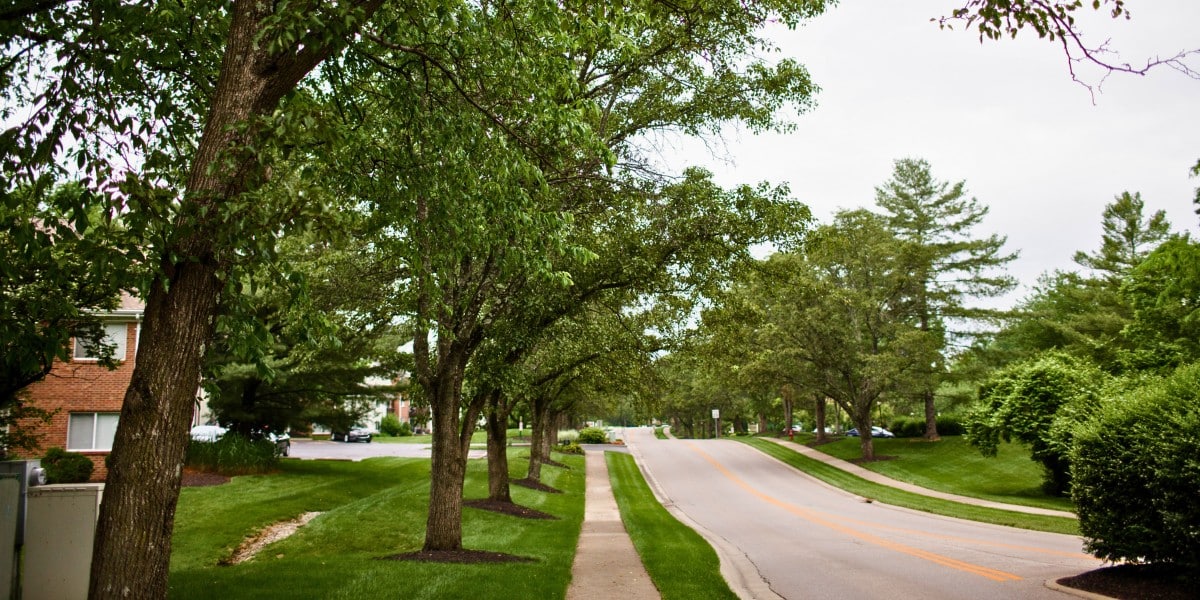
June is when the canopy in Greater Cincinnati neighborhoods like Blue Ash, Montgomery, and Kenwood finally fills back in—and when most homeowners notice what their trees actually need.
3 Common Problems Caused by Overgrown Trees
Not every overgrown tree needs the same type of pruning. The right approach depends on what’s happening on your property and what you’re trying to accomplish. Whether your goal is more sunlight, better clearance, or a smaller canopy, professional pruning is designed to solve the problem while preserving the tree’s natural shape and long-term health.
My Tree Is Too Dense
If your tree has become so full that it’s blocking sunlight, making your yard feel darker, or preventing air from moving through the canopy, crown thinning is often the right solution.
Rather than making the tree smaller, crown thinning selectively removes smaller interior and edge branches to improve light penetration and airflow while preserving the tree’s overall size and natural appearance. From the street, a properly thinned tree should look almost unchanged—it simply feels lighter and more open beneath the canopy.
For homeowners, that can mean brighter rooms, healthier grass and landscape beds, and less wind resistance during summer storms. If the tree has simply outgrown its space, however, crown thinning won’t reduce its height or spread.
RULE OF THUMB: Do not remove more than one-fourth of the living crown at one time. Most arborists stay well under the ceiling on mature trees. When done correctly, a thinned tree should look basically unpruned from a distance, just brighter underneath.
Low Branches Are Scraping My House or Getting in the Way
Low branches are solved with crown raising, sometimes referred to as crown lifting, which removes the lower limbs of a tree to create vertical clearance for:
- Roofs
- Gutters
- Driveways
- Fence lines
- Lawn access
In Cincinnati, it’s the most requested type of pruning because the tree that was the right size when it was planted a few decades ago has grown into the house, garage, or path of the mower.
The result is more usable space beneath the canopy, fewer branches rubbing against your home, easier lawn maintenance, and improved visibility across your property. Rather than changing the shape of the tree, crown raising simply lifts the canopy to better fit the space around it.
RULE OF THUMB: Removing too many lower limbs at one time stresses the tree because those limbs still feed it. At least two-thirds of the total height of the tree must still have living branches after a crown raise. When the necessary lift is substantial, a good arborist gradually raises the canopy over multiple visits.
My Tree Has Outgrown Its Space
If your tree has become too tall or too wide for the space where it was planted, crown reduction may be the right solution. Rather than dramatically cutting the tree back, crown reduction carefully reduces the height or spread while preserving its natural shape.
The result is a tree that’s better suited to its surroundings without looking butchered or misshapen. Crown reduction is most appropriate for ornamental and medium-sized landscape trees and is typically performed when a tree has simply outgrown its location.
How Crown Reduction Is Different from Tree Topping
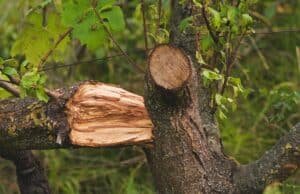
Tree topping cuts major limbs back to stubs with no regard for the tree’s natural structure. Crown reduction works differently. Instead of leaving stubs, an arborist shortens branches by cutting them back to healthy lateral branches—the smaller side branches growing from a larger limb. Those lateral branches become the new growing tips, allowing the tree to continue growing naturally.
Professional crown reduction also removes only about 10–20% of the canopy during a single pruning cycle. Removing significantly more than that stresses the tree and begins creating many of the same structural problems associated with topping. If you’re unfamiliar with the practice, learn more about common tree topping myths and why arborists avoid it.
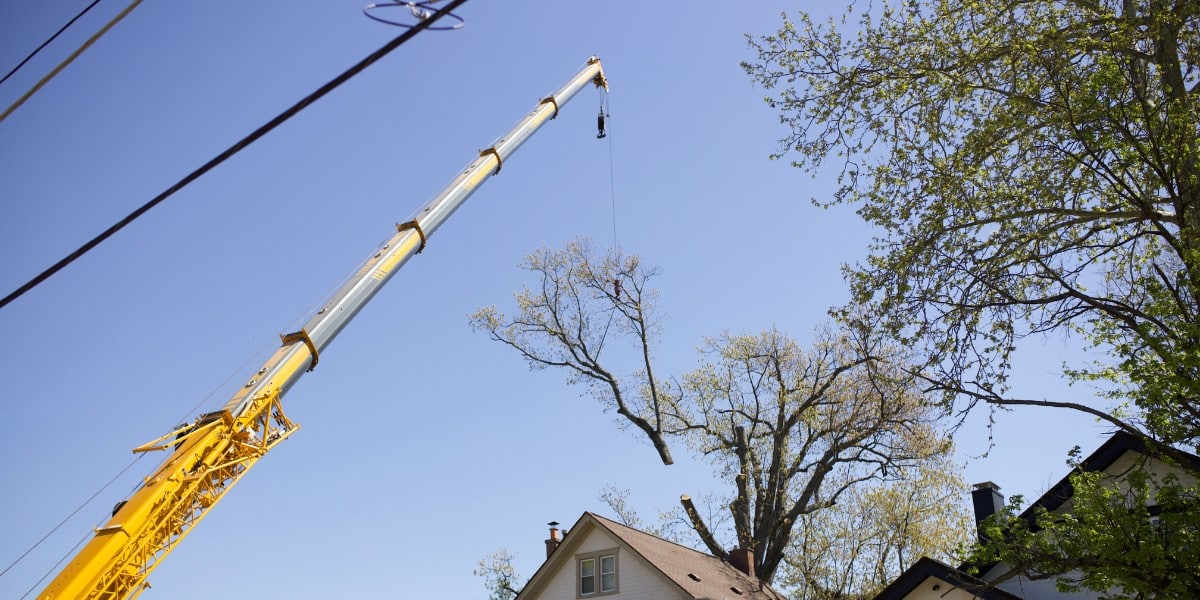
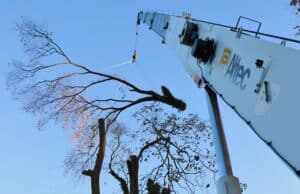
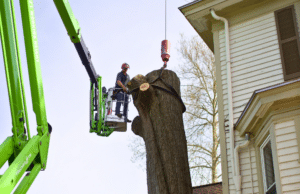
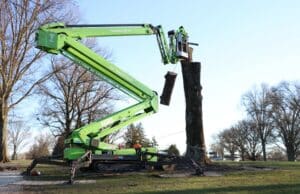
When a tree has outgrown its spot, removal with the crane is often safer and more honest than forcing a reduction the tree can’t survive.
When Pruning Isn’t the Answer
Professional pruning can solve many problems, but it can’t make a large-maturing tree fit a space that was too small from the beginning. If correcting the issue would require removing more than about one-fourth of the canopy, pruning is no longer the right solution.
Many of these situations aren’t caused by poor maintenance—they’re the result of planting a tree that eventually exceeds the available space. Trying to keep that tree artificially small often leads to topping or repeated heavy pruning, which can result in:
- Weak, poorly attached regrowth
- Increased decay
- Ongoing pruning costs every few years
- Eventual removal anyway
When a tree has outgrown its location, removal and replacement with a species better suited to the site is often the better long-term investment. An ISA Certified Arborist can determine whether pruning will solve the problem or whether replacement is the healthier option for both the tree and your property.
Frequently Asked Questions About Pruning Overgrown Trees
How often should large trees be pruned in Cincinnati?
Most mature trees benefit from professional pruning every three to five years, while younger trees typically need pruning every two to three years as their structure develops.
The ideal schedule depends on the tree species, how quickly it grows, its overall condition, and what was accomplished during the previous pruning. Trees that were topped or pruned incorrectly in the past may also require more frequent visits to restore a healthy branch structure over time.
How much does tree pruning cost in Cincinnati?
The cost of tree pruning depends on:
- Tree size
- Accessibility
- The required techniques
- How much work is involved
Reputable companies don’t quote pruning over the phone, because every tree is different and an accurate assessment requires an on-site look.
Can summer pruning hurt my tree?
Light summer pruning, which removes dead or broken limbs, is fine on most species. Major crown work is better scheduled for dormancy, though, except for oaks. In Ohio, oaks shouldn’t be wounded during the growing season, April 15 through October 1, because fresh wounds attract the sap beetles that spread oak wilt.
Can pruning fix a tree that was already topped?
Sometimes. Corrective pruning can improve the structure of previously topped trees by removing weak regrowth and encouraging stronger branch development. However, the extent of recovery depends on the species, the severity of the topping, and how much structural damage has already occurred.
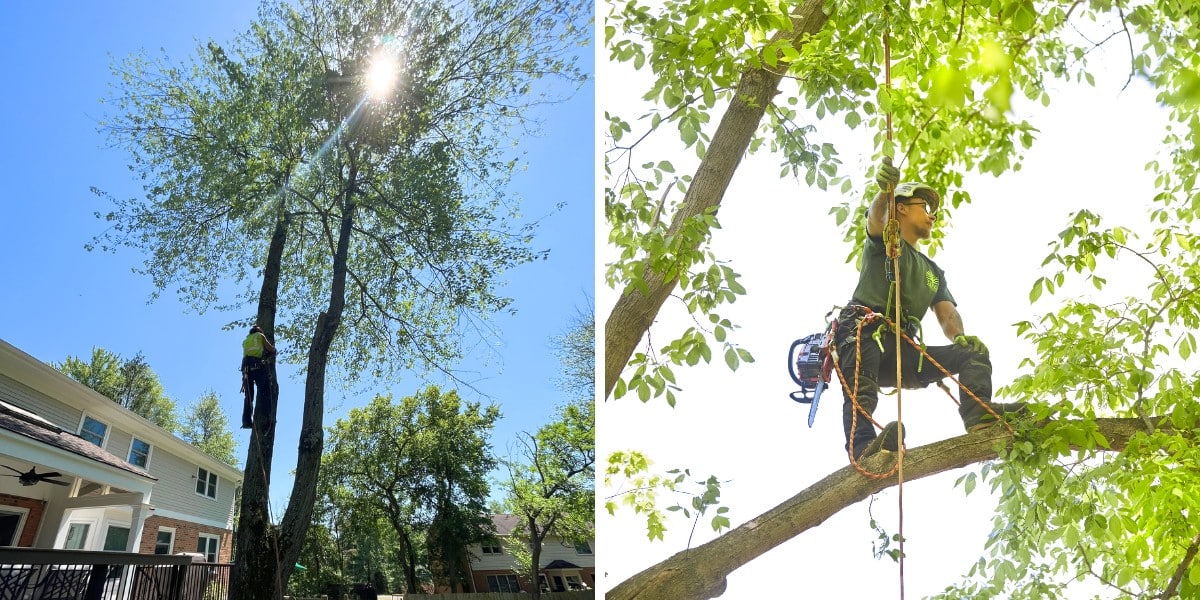
Crown reduction takes climbing access and careful cuts back to lateral branches—not stubs.
Trust Lefke Tree Experts to Recommend the Right Pruning Plan
Not every overgrown tree needs the same solution. An ISA Certified Arborist from Lefke Tree Experts will evaluate your tree’s condition, explain which pruning technique is appropriate, and let you know if pruning is the right solution—or if another approach would better protect your property and your tree.
Call Lefke Tree Experts at 513-325-1783 or request an estimate online to get started.