
Every summer, strong thunderstorms move through the Cincinnati Tri-State, bringing down trees and heavy limbs across neighborhoods. If one of those storms made you notice a large tree on your property that’s leaning, storm-damaged, or showing signs of structural weakness, you’re probably no longer wondering whether it should come down—you’re wondering when to remove it.
Timing matters more than many homeowners realize.Winter is often the best time for routine tree removals, but large, hazardous trees are a different story. When specialized equipment is required, the safest and most practical time to remove the tree depends on its condition, the work site, and the risk of waiting.
Key Takeaways
- For a large removal, safe equipment access and firm ground matter more than the dormant-season calendar.
- Summer’s firmer, drier ground helps heavy equipment avoid the rutting and deeper compaction that saturated spring and thaw-season soil causes.
- Scheduling proactively is cheaper and lower-risk than a reactive removal after the tree fails in a storm.
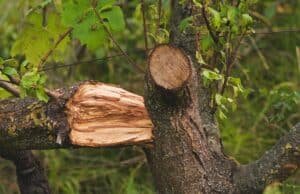
- A sudden lean, large trunk wounds, or signs of internal decay mean the tree should be assessed by an ISA Certified Arborist now, regardless of season.
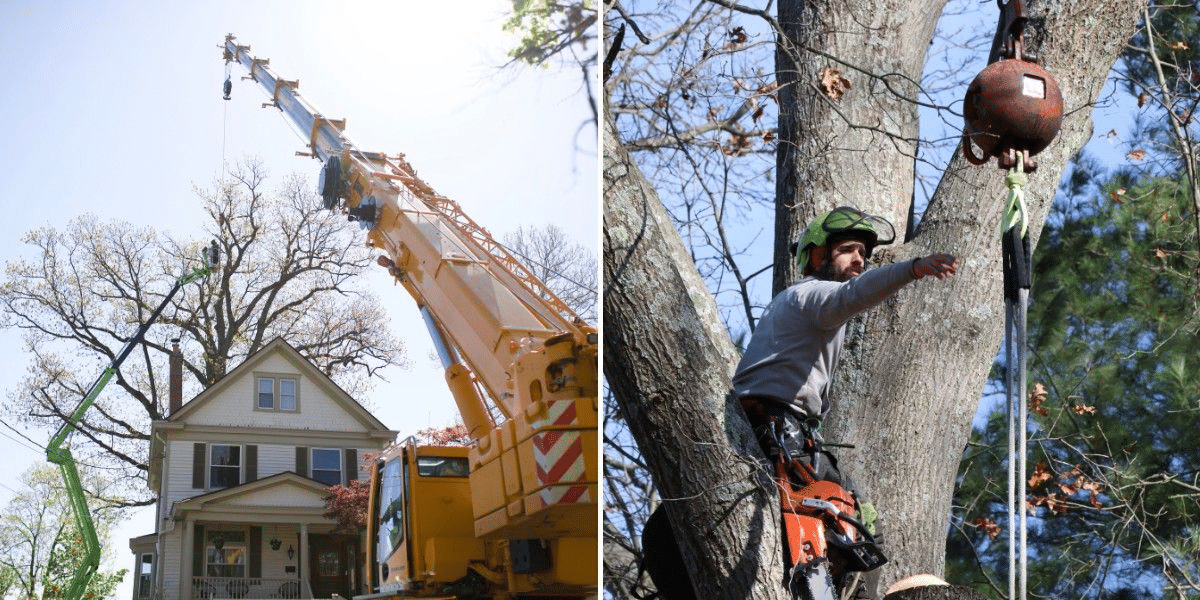
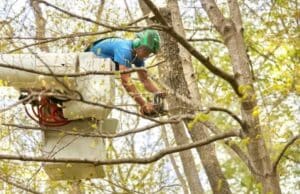
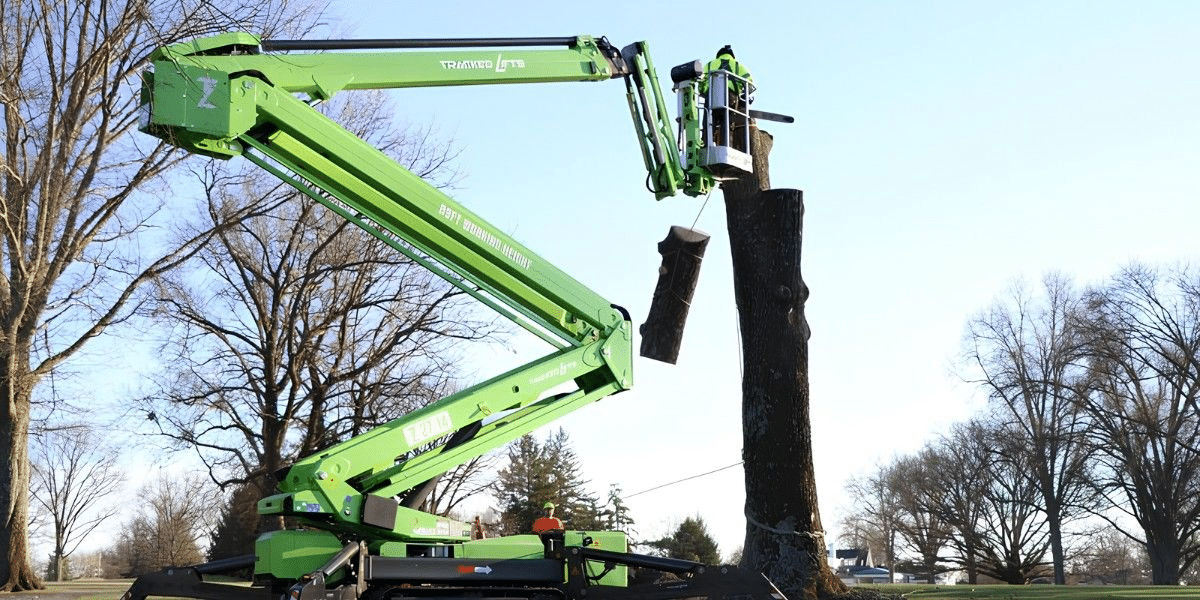
A crane lifts each section straight up and out instead of dragging heavy wood across the grass.
When Is the Best Time to Remove a Large Tree in Cincinnati?
For many large tree removals in the Cincinnati area, summer is often the best time to schedule the work. While smaller, routine removals can usually wait until the dormant season, large trees that require a crane or grapple saw benefit from firm, dry ground. Stable soil better supports heavy equipment, helping protect your lawn from deep ruts and soil compaction.
Wet ground creates two main challenges:
- Deeper Soil Compaction: Saturated soil compresses more easily under heavy equipment, making compaction harder to correct after the job is finished.
- More Lawn Damage: Instead of evenly supporting the equipment’s weight, wet soil gives way, increasing the likelihood of ruts and a larger disturbed area.
That’s especially true in communities like Symmes Township, where heavy clay soils hold moisture for longer. Waiting until the ground is firmer can mean the difference between a clean removal and a lawn that needs significant repair afterward.
Why Do Large Trees Require More Planning to Remove?
Not every tree removal is the same. A small ornamental tree in an open yard can often be felled in one piece. A mature oak, sycamore, or tulip poplar growing near a home, driveway, fence, or power lines usually can’t.
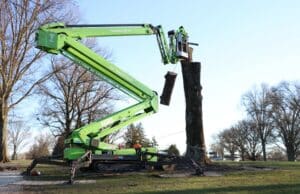
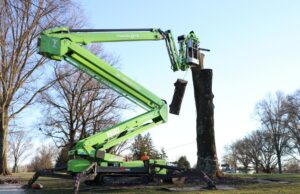
Instead, those trees are removed in sections using specialized equipment such as a crane or grapple saw. Each piece is carefully cut, lifted, and lowered to the ground so nothing strikes nearby structures or landscaping.
Because cranes and grapple saws are much heavier than the equipment used for a routine tree removal, planning becomes just as important as the cutting itself. Before work begins, the crew has to consider:
- Equipment Placement: Where the crane or grapple saw can be safely positioned.
- Access to the Tree: The best path for equipment to reach the work area while minimizing impact on your property.
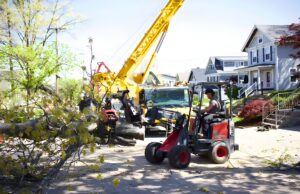
- Ground Conditions: Whether the soil is firm enough to support heavy equipment without causing excessive rutting or compaction.
That’s why the best time to remove a large tree isn’t determined by the calendar alone. It’s determined by when the tree can be removed safely, efficiently, and with the least impact on your home and landscape.
What Happens If I Wait Until the Tree Fails in a Storm?
Waiting until a large tree fails in a storm almost always costs more and has more risk than removing it on your own schedule.
If You Wait for the Tree to Fail
Giving the tree the chance to choose the timing doesn’t put the odds in your favor:
- Decay or root problems weaken the tree until high wind drops it, often onto a roof, fence, or car.
- The ground is saturated from that same storm, so safe equipment access is hardest right when you need it.
- You pay an emergency premium, and your options shrink to whichever crew can show up fastest.
If You Remove the Tree Before It Fails
Scheduling it yourself sets the terms:
- Firm ground makes it easier to use cranes and other heavy equipment with less impact on your lawn.
- The tree can be dismantled in a controlled, piece-by-piece process.
- You avoid emergency pricing and can schedule the work before storm season peaks.
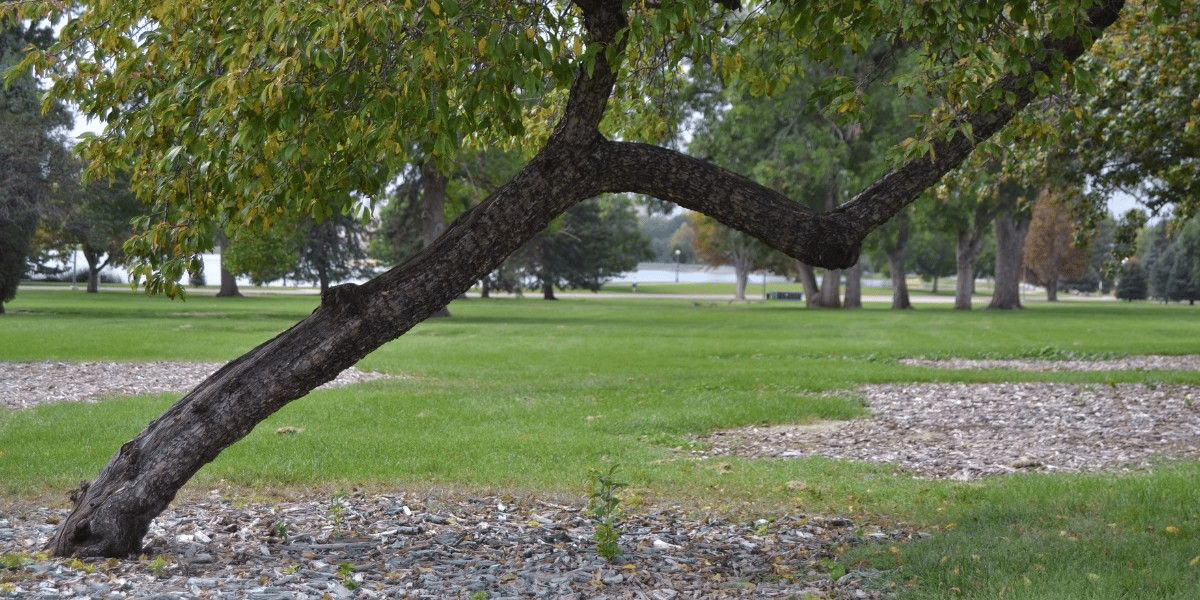
A sudden lean toward a structure is one of the clearest signals a large tree should be assessed now.
How Is a Large Tree Removed Without Tearing Up My Yard?
A large tree comes down in a controlled manner, section by section, using equipment and ground protection chosen to keep your lawn and landscaping intact. When you work with Lefke Tree Experts, that looks like this:
- Preliminary Planning : Setup and a clear path for equipment come before any cutting
- Sectional Dismantling : A climber works with a crane operator, or a grapple saw lifts pieces out remotely instead of dragging a whole trunk across the grass.
- Spread the Load : Overlapping mats or plywood distribute equipment weight so it doesn’t concentrate and rut the turf.
We own crane-assisted removal equipment, which lets us reach trees in the tight lots around Blue Ash and Montgomery without heavy dragging. That’s part of how a good crew keeps your property safe during tree work.
Frequently Asked Questions About Large Tree Removal
What is the cheapest time of year to remove a large tree?
Demand is softest in the dormant season, so routine jobs can be priced a little lower then. For a large removal that needs heavy equipment, the cheaper-looking off-season can backfire: taking it down over soft, wet ground risks lawn repair that costs more than the seasonal discount ever saved. Once that’s factored in, firm summer ground is usually the better value.
Isn’t winter the best time to remove a large tree?
Winter is often the best time for routine tree removals because dormant trees have fewer leaves, and scheduling can be more flexible. Large tree removals are different. When a crane or grapple saw is needed, firm ground often becomes more important than the season itself. Cincinnati’s winter freeze-thaw cycles and early spring rains can leave the soil too soft for heavy equipment, increasing the risk of lawn damage. That’s why summer is often the better choice for large removals, even though winter remains ideal for many smaller jobs.
Will rain delay my tree removal?
It can, and that’s on purpose. Saturated ground is where heavy equipment does the most damage, so a careful crew tests the footing before rolling anything onto your yard and may push the job a few dry days out. Waiting for firmer ground is part of what keeps your yard in good shape.
Does removing a large tree always require a crane?
No. A crane comes out when a tree is too big, too unstable, or too boxed in by the house and fences to dismantle safely from the ropes. When it is needed, it lifts each section straight up and out instead of dragging limbs across the lawn. Because we own our crane-assisted removal equipment, we can bring it to tight lots without the delay or surcharge of a rental.
Schedule Your Large Tree Removal with Lefke Tree Experts
If you already know your large tree needs to be removed, choosing the right time can make a big difference in how smoothly the job goes. Lefke Tree Experts uses specialized equipment and a professional team to safely remove large trees while minimizing the impact on your lawn and landscaping. Summertime slots fill up fast, so request an estimate while you still can, or call us at 513-991-2453.