
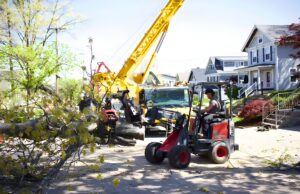
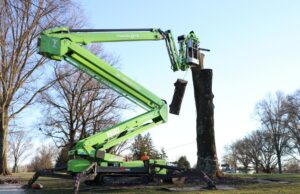
If your tree was one of the lucky ones still standing after the first derecho to hit the Cincinnati area since 2012(opens in new tab), you may be wondering whether it came through the storm without serious damage. A tree doesn’t have to fall to be damaged. Cracks, broken or hanging limbs, a new lean, or changes around the roots can all signal structural problems that deserve a closer look.
Some of those warning signs need prompt attention, while others can be monitored. Knowing the difference can help you determine when to keep an eye on your tree, when to call an arborist, and when it may no longer be safe to leave it standing.
Key Takeaways
- A tree becomes dangerous when a structural problem makes failure more likely and people or property are within reach.
- New or worsening cracks, leans, root movement, decay, and broken or dead branches can indicate a tree or limb is more likely to fail.
- Sudden changes after a storm are generally more urgent than defects that have remained stable over time, especially when the tree could hit a home, vehicle, or frequently used area.
- A dangerous tree does not always need to be removed; pruning, monitoring, or reducing what could be hit may lower the risk in some situations.
- Keep people and property away from a tree showing significant structural changes and have it professionally assessed rather than trying to inspect or address the damage yourself.
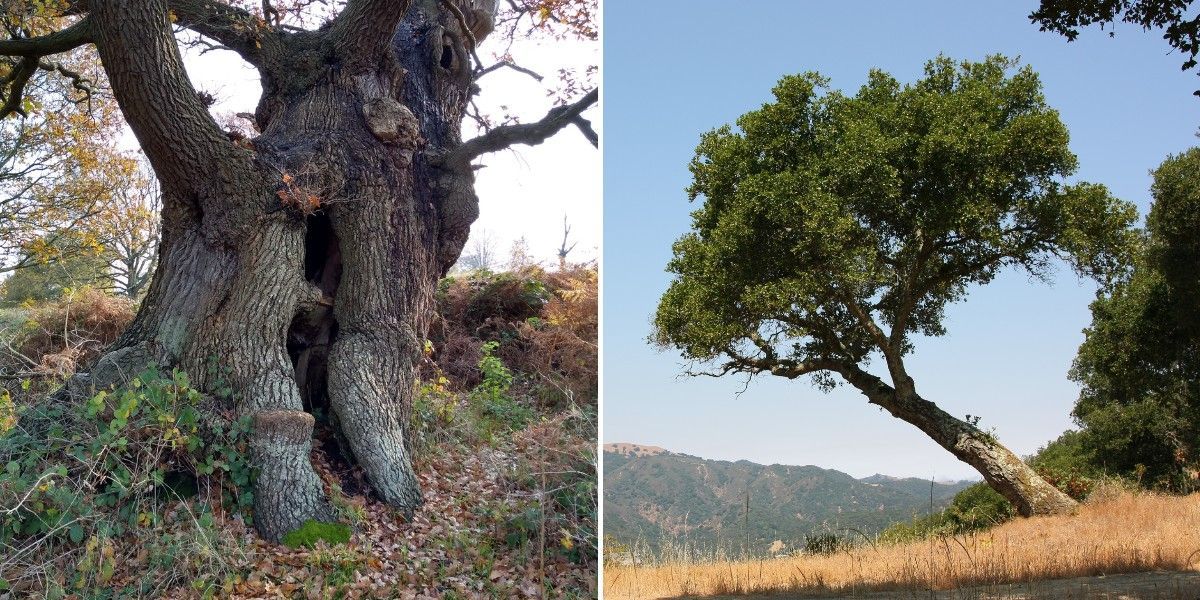
A cavity at the base and a pronounced lean are two of the defects worth a closer look. Whether either one is dangerous depends on what sits within falling distance.
What Makes a Tree Dangerous?
A tree is dangerous when a structural defect makes the tree or a large branch more likely to fail and there are people or property within reach.
A crack, cavity, dead branch, or other defect alone doesn’t necessarily make a tree dangerous. The same defect can carry very different levels of risk depending on its severity, the likelihood of failure, and what could be hit. A decayed limb hanging over an unused corner of the yard, for example, presents a different level of risk than the same limb hanging over your roof, driveway, or patio.
What Are the Signs a Tree Could Fail?
Signs a tree could fail include changes around the roots, a new or worsening lean, cracks or splits in the trunk, significant decay, and large broken or dead branches. Some of these problems develop gradually, while others can appear suddenly after severe weather.
Roots and Soil Around the Base
Problems below ground can show up as visible changes around the base of the tree. Look for:
- Freshly cracked, mounded, or lifted soil, particularly after strong winds, which can indicate movement of the root plate.
- Mushrooms or fungal conks growing from the root flare or major roots, which may indicate decay.
- Soft, crumbling, or missing wood around the base of the tree.
- New cavities or areas where decay appears to be expanding.
Trunk and Major Branch Unions
Cracks, decay, and weak connections between stems can affect the tree’s ability to support its weight. Look for:
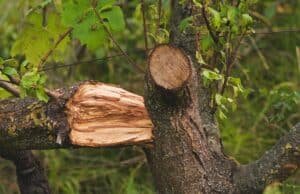
- An open crack running through the trunk, a major branch, or the union where two stems meet.
- Codominant trunks with narrow attachments, particularly when there is included bark, cracking, or visible separation.
- Large cavities or areas of decayed wood that may reduce the amount of sound wood supporting the tree.
- A new or worsening lean, especially after a storm or when accompanied by movement around the roots.
Branches and Canopy
Changes higher in the tree can indicate individual branches are more likely to fail or that the tree’s overall structure has changed. Look for:
- Broken or hanging limbs caught in the canopy.
- Large dead branches, particularly over a home, driveway, walkway, or another frequently used area.
- A canopy that has become severely unbalanced after losing a major limb.
- Large, overextended branches or weak growth that developed after topping or poor pruning.
What Makes Some Tree Problems More Urgent Than Others?
Tree problems become more urgent when the damage is new or getting worse, the tree shows signs of active movement, or a falling tree or branch could hit people or property. A defect that has remained unchanged for years may warrant monitoring, while the same type of defect that appeared after a storm(opens in new tab) can require prompt assessment.
A few factors can increase the urgency, including:
- Recent Changes: A new lean, crack, split, or root movement after a storm is more concerning than a condition that has remained stable over time.
- Continued Movement: Freshly lifted soil, a widening crack, or increasing separation between two stems can indicate that the tree’s structure is continuing to change.
- What’s within Reach: A compromised tree or branch over a home, driveway, walkway, road, or frequently used part of the yard presents greater risk than the same defect where there is little chance of hitting someone or something.
- The tree’s Species and Condition: Some trees become more unpredictable as they decline. This is especially important for dead or severely declining ash trees in Cincinnati and Northern Kentucky, where emerald ash borer is established. EAB-damaged ash becomes increasingly brittle as it deteriorates, and Purdue University has documented limbs breaking from as high as 30 feet(opens in new tab), even on calm days.
Does a Dangerous Tree Always Need to Be Removed?
No. A tree with a structural defect may be able to remain in place if the risk can be reduced through pruning, monitoring, or other measures. Whether that’s possible depends on the type and severity of the defect, the tree’s overall condition, and what could be affected if it fails.
Depending on what an arborist finds, the recommendation may include:
- Pruning: Removing dead, damaged, or overextended branches can reduce weight or eliminate an individual branch that poses a risk.
- Monitoring: A defect that is currently stable may be periodically reassessed for changes rather than treated immediately.
- Reducing the Target: In some situations, moving vehicles, furniture, play equipment, or other movable objects out of the potential fall zone can reduce risk.
- Tree Removal: Removal may be recommended when the likelihood and consequences of failure are high and the risk can’t reasonably be reduced another way.
If the concern is primarily the tree’s health rather than its structure, that’s a slightly different question. A declining tree may still have treatment options depending on what’s causing the problem and how far it has progressed. Lefke’s guide to what to do for a dying tree explains when recovery may be possible and when removal becomes more likely.

When you can’t tell how serious a tree problem is from the ground, a call to an arborist can help you determine what to do next.
What Should You Do if You Think a Tree Is Dangerous?
If you think a tree may be dangerous, keep people and property away from the potential fall zone and have the tree assessed before attempting to remove branches or investigate the damage yourself.
Hanging limbs, fresh movement around the roots, widening cracks, and other significant structural changes warrant extra caution. Avoid walking, parking, or spending time beneath the affected part of the tree. Trees or branches touching utility lines should be left alone and reported to the utility company.
For concerns that don’t appear urgent, take photos from the same location to track whether a lean, crack, or other visible defect changes over time. This can be especially useful after severe weather or when comparing the tree from one season to the next.
A professional assessment can help clarify anything you’re unsure about and determine whether the tree can be monitored, would benefit from pruning, or has become hazardous enough that removal is the safer option.
Frequently Asked Questions About Dangerous Trees
Can a hollow tree still be safe?
Sometimes. A hollow trunk can retain substantial strength if enough sound wood remains, but the amount and distribution of remaining sound wood matter. A visible cavity doesn’t tell you by itself whether the tree is safe.
Does a mushroom at the base of my tree mean it’s dying?
Not necessarily. Knocking the mushrooms off accomplishes nothing, since the fungus is inside the wood rather than on the surface. An arborist may use visual assessment and, when warranted, tools such as sounding or resistance drilling to investigate suspected internal decay.
How often should I check my trees?
Check trees at least annually, and inspect them again after severe storms or work that disturbs the root zone. Root damage may not become obvious in the canopy until months, seasons, or even years later, depending on species.
Can I straighten a leaning tree myself?
Don’t try to straighten a mature or significantly uprooted tree yourself. Recently wind-thrown young trees can sometimes be reset by professionals, but success depends on tree size, root damage, soil conditions, timing, and tree health.
Can a dangerous tree be pruned instead of removed?
Sometimes. Deadwood and a few compromised limbs can often be pruned out, but extensive decay in the root flare or a major trunk split can compromise the structure that supports the tree and may leave removal as the safest option.
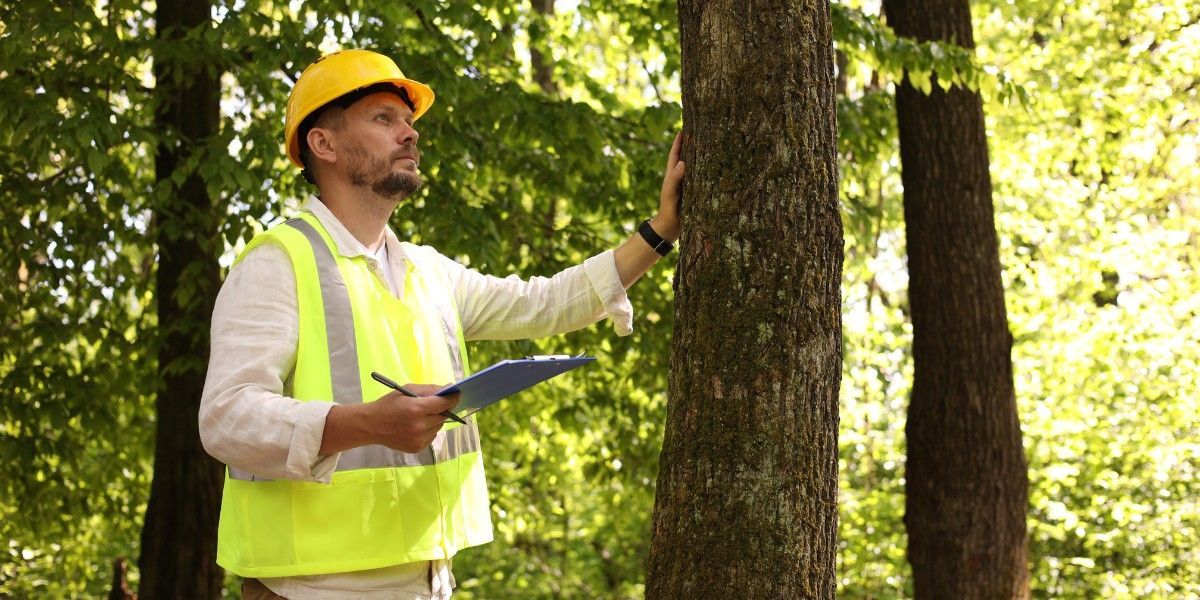
A hazard assessment covers the root flare, trunk, branch unions, and canopy, plus the site conditions around the tree.
Get Clear Answers About a Concerning Tree from Lefke Tree
A crack, lean, dead branch, or other change doesn’t always mean a tree needs to come down, but it’s worth knowing what you’re dealing with. Lefke Tree Experts’ Certified Arborists can assess the tree, explain the level of risk, and recommend whether pruning, monitoring, or removal makes sense based on its condition and location.
Serving homeowners throughout Florence, Boone County, and Greater Cincinnati, Lefke Tree Experts can help you make an informed decision about what comes next. Call us at 513-991-2453, or request an estimate online.