
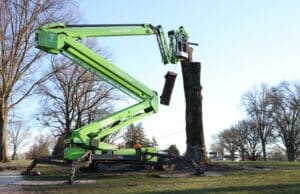
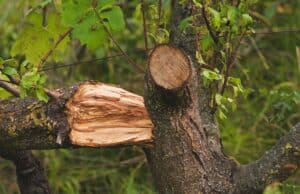
The National Weather Service classified the August 2026 storms that tore through Hamilton County as a derecho and confirmed one EF-1 tornado, which caused widespread outages and debris across Blue Ash, Montgomery, and Kenwood. Many trees came through standing and green, which leaves a question: A tree may look fine after a storm, but is it damaged?
Cracked branch joints, shifted roots, and limbs split high in the crown are hard to see from the yard, and any can hold for a while before giving way in the next strong wind. The weeks after a storm, ahead of winter, are the best time to find them.
Key Takeaways
- A tree that is standing and green can still be damaged in its roots, wood, or upper crown.
- Cracked limbs hanging high in the crown, heaved soil around the base, and a lean that started after the storm are the signs worth acting on.
- Codominant stems, a full canopy, and earlier damage that was never assessed make a tree more likely to fail next time.
- An assessment decides whether to keep a tree, prune it to reduce wind load, or remove it before winter.
Can a Tree Look Fine After a Storm and Still Be Damaged?
Yes, a tree can stay upright and green and still be damaged in places you can’t easily see. Green leaves only show the tree’s still alive today, not that the wood, branch attachments, and roots holding it up are sound.
Storms Test Weak Spots That Were Already There
A storm is a stress test, and a tree’s existing weak spots are what cause it to fail. Dead branches, decay inside the trunk, and roots damaged by soil grade changes or construction are common examples. Two things follow from that:
- Strong winds can break branches and even uproot trees, particularly when heavy rain has softened the soil.
- Trees that seem undamaged still need a check, especially larger trees near people or property.
Wind Load Strains the Whole Tree
Wind load is the force of moving air pushing on a tree’s canopy. Wind speed also increases with height, so taller trees take more of it. That load strains the whole tree, not just the branches you see swaying:
- Foliage and branches toward the top of the crown are largely responsible for how much a trunk moves in wind.
- That force travels down the trunk and into the roots, where no one can see it.
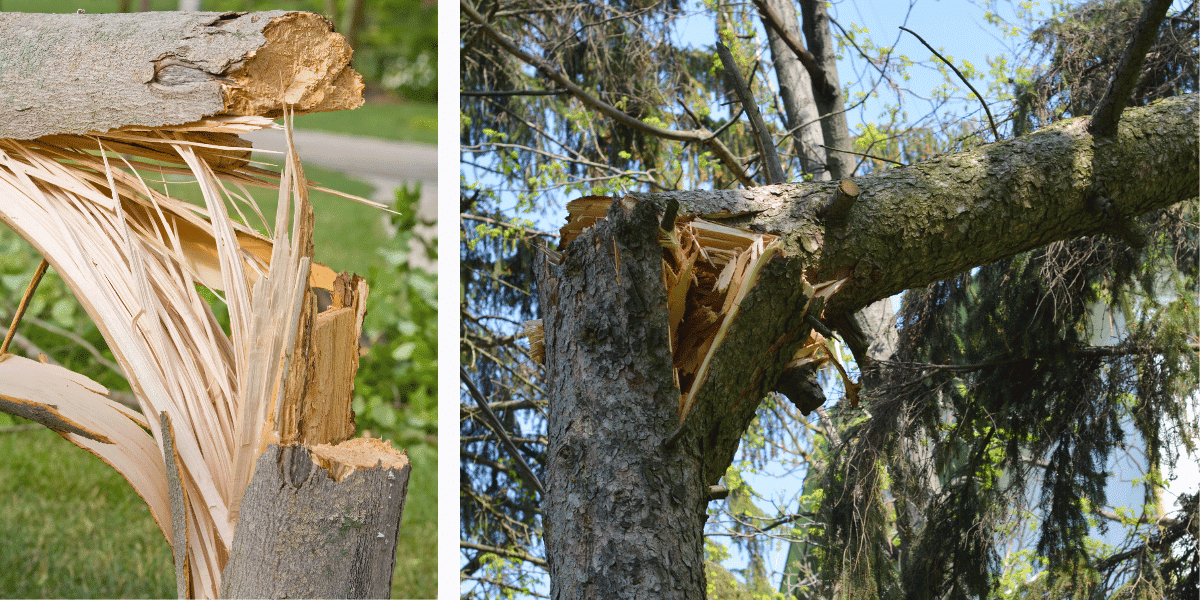
Broken limbs high in the crown can keep moving after the storm has passed and stay a falling hazard.
What Storm Damage Is Hard to See From the Ground?
Much of it hides high in the crown, in the roots, or in the trunk. Check from outside the spread of the canopy, and never stand under a cracked or hanging limb.
Cracked and Hanging Limbs
Broken limbs high in the crown can keep moving after the storm has passed, so they stay a falling hazard. Keep an eye out for these:
- Cracks or splits along a limb
- Limbs hanging at an odd angle
- Partly attached limbs caught in other branches
Size and location set the risk, which is why a limb over a roof or driveway should come first.
Root Plate Heave and New Lean
The root plate (the mass of roots that holds a tree upright) can be damaged even when the trunk looks untouched. Watch for the following:
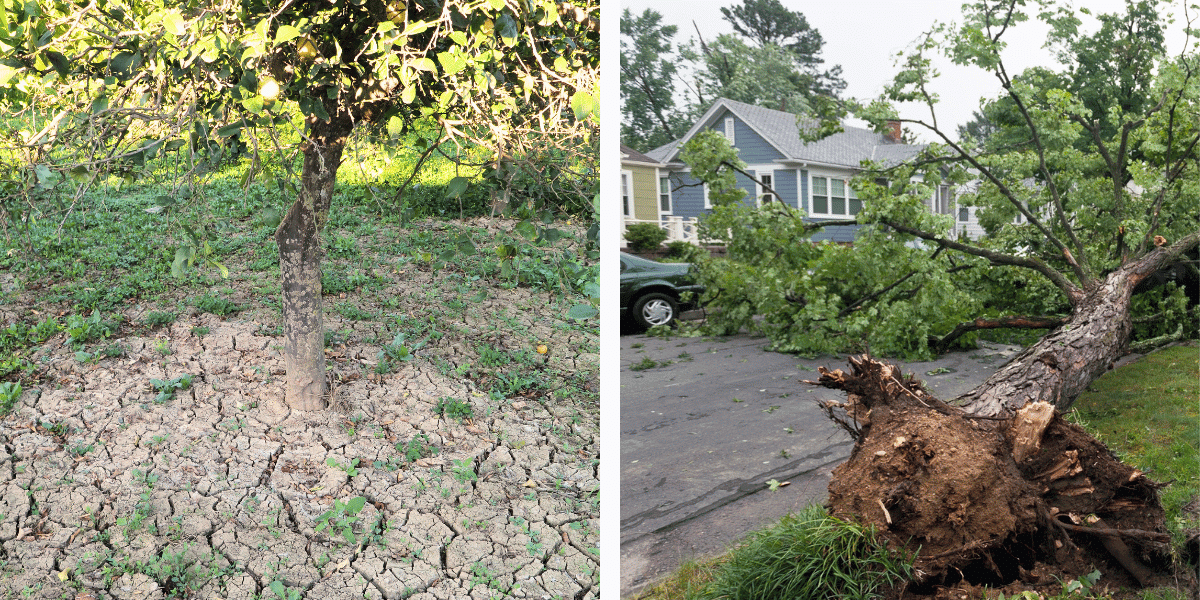
- Cracks or separations in the soil near the base can mean the roots have moved, which is a warning sign of failure, especially if the tree is leaning.
- A lean that wasn’t there before the storm is an important sign.
Since the roots are underground, the soil around the base is your best clue.
Trunk Cracks and Fresh Bark Wounds
Fresh cracks and wounds on the trunk can signal a serious structural problem, especially when paired with other changes. Watch out for things like:
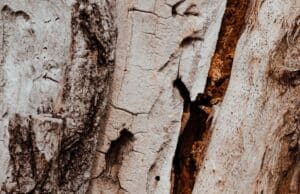
- Cracks or splits in the trunk, major branches, or branch unions that weren’t there before the storm
- Loose bark on the trunk
- Fresh wounds, which can be minor or the start of a significant problem
These are enough reasons to have an ISA Certified Arborist take a look at the tree.
Cracks in the soil near the base and a new lean can mean the roots have moved.
Which Risk Factors Make a Tree More Likely to Fail in the Next Storm?
A tree’s more likely to fail during the next storm if it has a structural defect, sits where wind and ice hit the hardest, or carries earlier damage nobody assessed. Each raises the odds, and a tree with all three should be treated as a top priority.
Codominant Stems and Included Bark
Codominant stems can be failure points, and there are three things that explain why that is:
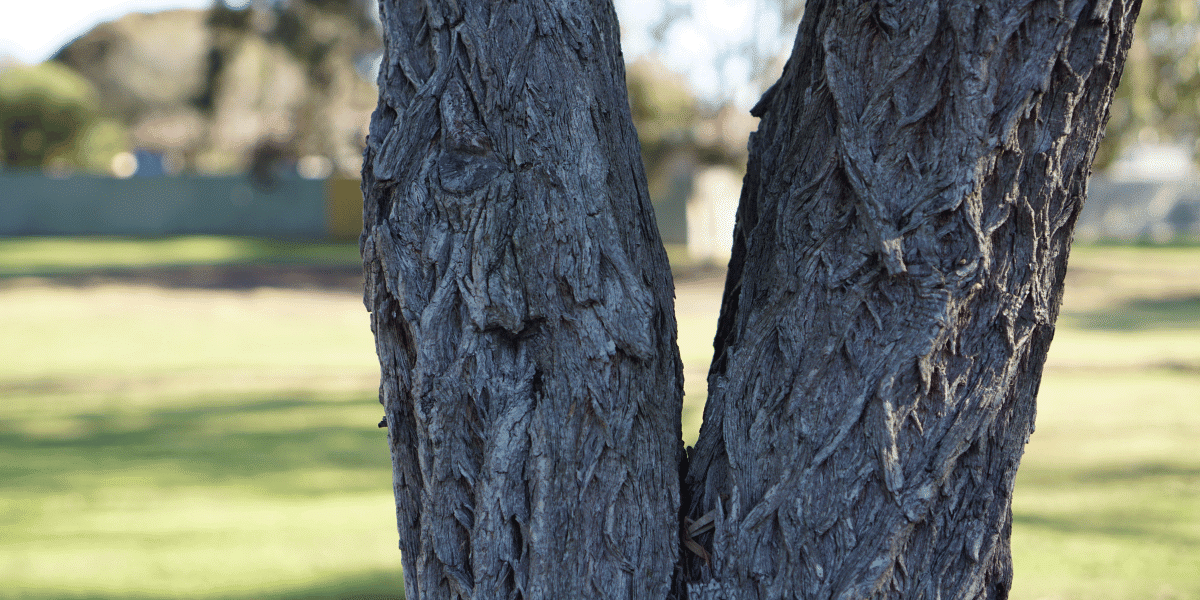
- Codominant stems are stems of roughly equal diameter that compete to be the main trunk.
- They lack the interlocking wood fiber of a normal branch attachment, so the union between them is weak.
- Bark gets pinched between the stems, which is called included bark, and trees with it are more prone to failure.
Careful pruning of the competing stems can lower the risk on some trees.
Dense Canopy and Wind Exposure
A full canopy gives wind more to push on. Trees in these spots take the most wind compared with sheltered trees:
- Trees on the edge of a property
- Trees along an open corridor like I-71
- Trees on a corner lot
Prior Damage and Ice Load
Ice adds weight to every branch, so a tree weakened by an earlier storm faces its hardest test come wintertime. Ice and snow loads hurt a tree in a couple of ways:
- Heavy ice can break branches under the added weight.
- Ice and snow loading lowers the wind speed needed to tip a tree over.Susceptibility to ice damage also varies considerably by species.
What Does a Post-Storm Tree Assessment Decide?
It decides whether the tree can be kept safely or should come down before winter comes. That call depends on how much damage the tree has and what lies within reach if it fails.
Trees Worth Keeping
If a tree is sound enough to keep, the assessment may point to pruning to reduce wind load. The research behind pruning shows both its value and its limits:
- A study on young live oaks found that crown reduction and thinning reduced upper-trunk motion in strong wind, while crown raising did not.
- That study found no fewer broken branches in thinned trees, so pruning helps but doesn’t storm-proof a tree.
Tree That Can’t Be Made Safe
Pruning works on the crown, so it can’t fix a tree whose roots or trunk are compromised. When damage runs that deep, remove a tree that can’t be made safe before winter weather arrives to keep your house, driveway, and everything else in its fall zone safe. Hire an ISA Certified Arborist, and watch out for storm chasers who knock on doors offering to do cheap work.
Frequently Asked Questions About Possibly Storm-Damaged Trees
Can I wait until spring to see if my tree is damaged?
Not safely. Cracks, split branch unions, and heaved soil are warning signs of failure whenever they show up, and a tree that fails over winter can land on the house or driveway long before spring leaf-out would reveal anything. Have an ISA Certified Arborist look at it now.
Should I have my tree checked if it looks fine, but my neighbor’s came down?
Yes. Root space, soil, structure, and exposure vary from lot to lot, so what happened to a neighbor’s tree says little about yours.
Which trees are most likely to fail in a storm?
Silver maples and Callery (Bradford) pears are two common storm-prone trees in Ohio. Silver maples have a reputation for weak wood and poor branch unions, and older Callery pears often split at tight V-shaped branch unions.
What should I do if my tree is leaning after a storm?
Keep people, pets, and vehicles out of the area where the tree could fall until an arborist has inspected it. Leaning trees can keep shifting, so don’t park or work near the fall zone.
Can I remove a storm-damaged tree myself?
No. Trees and limbs under tension can react unexpectedly when cut or moved, and cleanup near buildings and utility lines is inherently dangerous. If a power line is down, stay at least 30 to 50 feet away and call 911.
Codominant stems with included bark have a weak union that can fail in the next storm.
Get a Post-Storm Assessment From Lefke Tree Experts
Finding damage now lets you prune or remove a tree on your schedule instead of waiting until the next storm. If you’re in Blue Ash, Montgomery, Kenwood, or nearby, we’ll tell you straight up whether the tree should stay or go. To schedule a site visit, request an estimate online.