

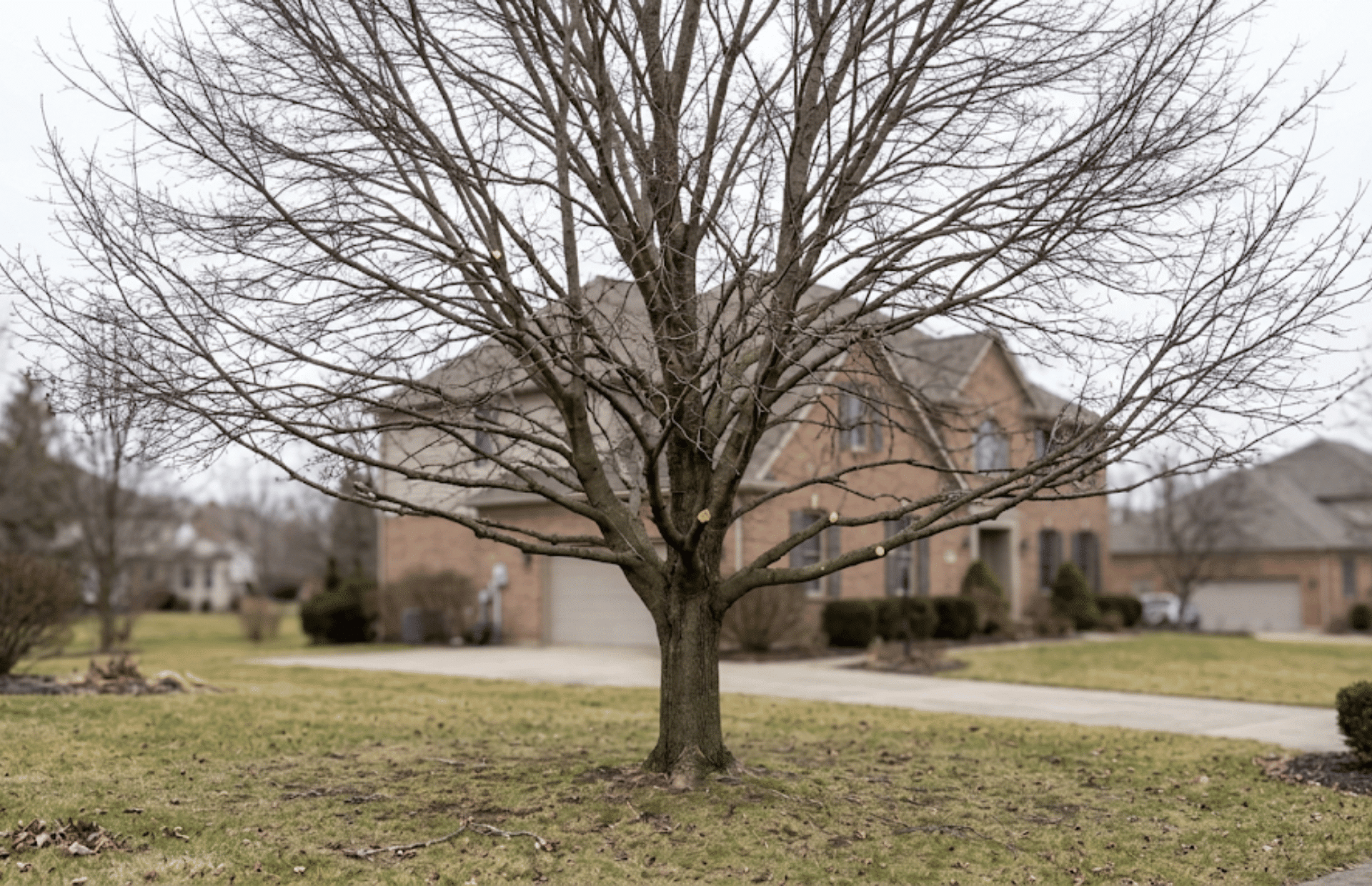
Since spotted lanternfly is under a statewide quarantine in Ohio and the Asian longhorned beetle is still quarantined in Clermont County, homeowners in Cincinnati have good reason to keep their eyes out for insects on their maples. If a maple is pruned in late winter or early spring, it’s likely to bleed sap from the cuts, which can raise fair questions, like: Does pruning attract insects to maple tree wounds?
Deciding not to prune just because of that fear can leave necessary work undone or push the cuts into a poor window.
Key Takeaways
- No Ohio source names an insect that is drawn to a maple pruning cut.
- Most maples pruned in winter or early spring are sure to bleed, which is mostly cosmetic.
- In Ohio, many trees are best pruned from March through June, when growth and callus formation are highest.
- Verticillium wilt infects maples through the roots, and wounding and drought stress make it more likely.
- Late winter and the March to June window are both supported, so match timing to the size of the cut.
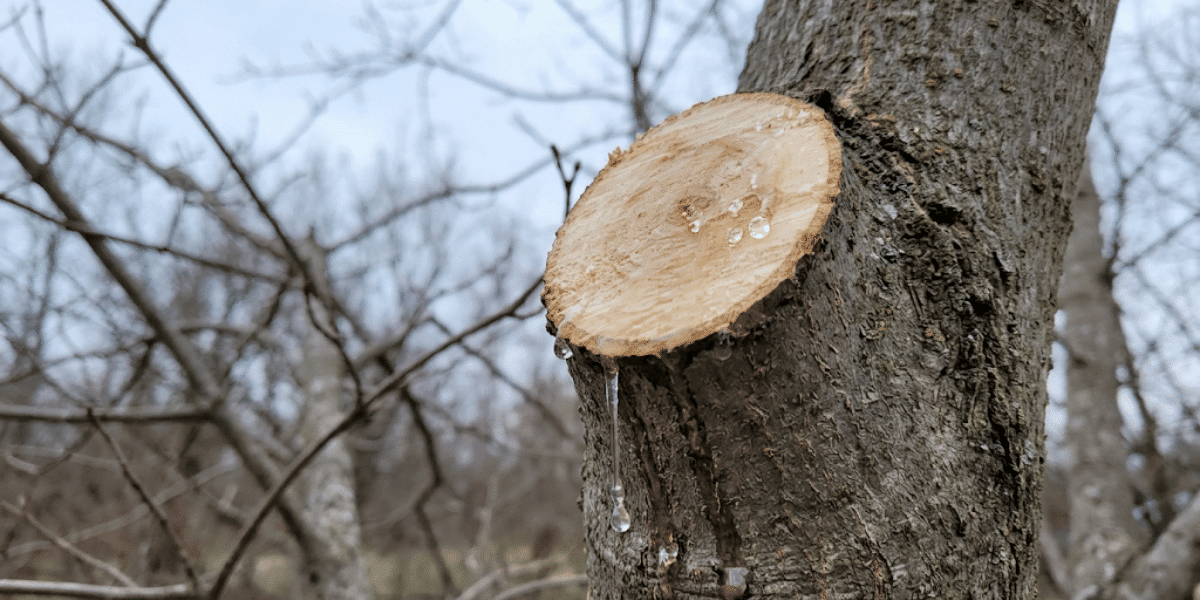
Sap bleeding from a fresh cut is mostly cosmetic and is not said to harm the tree.
Does Pruning a Maple Tree Attract Insects?
No reviewed source names an insect drawn to the pruning cut itself, but sap flow can attract insects or cause disease, which is why maples have different timing. No reviewed Ohio source ties pruning cuts to borer attacks, and Verticillium wilt mainly enters through the roots. .
The documented maple-specific timing issue is sap bleeding, and the sap loss itself is not said to harm the tree.
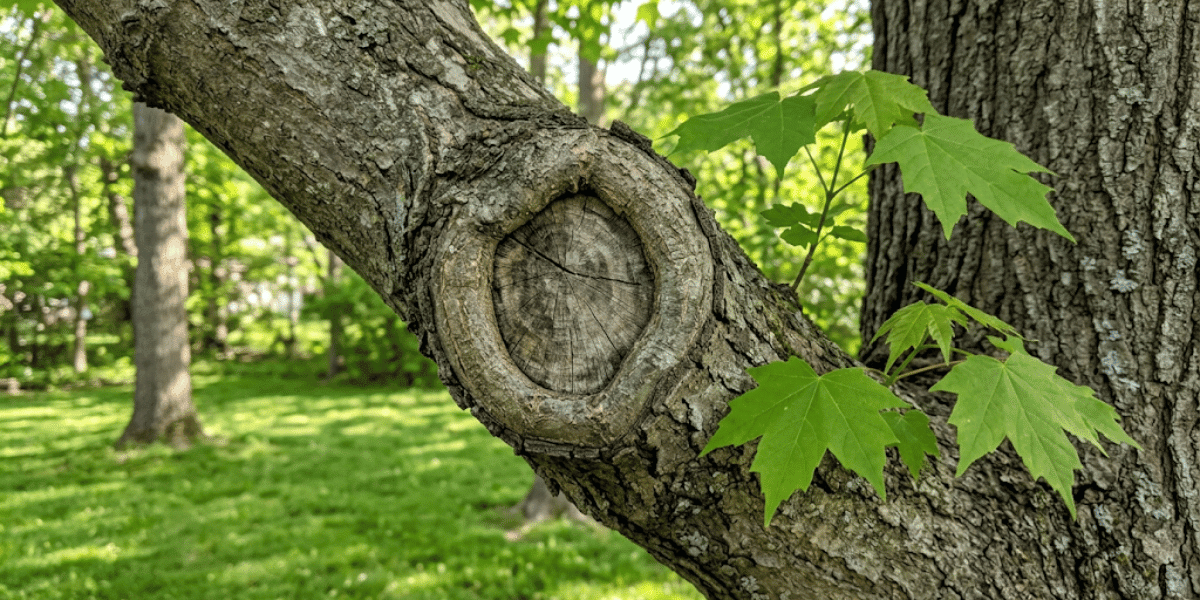
Large wounds close slowest, and some trees never fully seal them.
When Is a Fresh Maple Pruning Cut Most Vulnerable?
A fresh maple pruning cut is most vulnerable until the tree seals it; large wounds seal best in spring to early summer (March through June), when the tree’s vigorously growing and quickly builds callus. Trees protect wounds by walling off the damaged wood through a process called “compartmentalization.” Sealing speed isn’t the same for every cut, and the following factors can slow it:
- Wound Size: Bigger wounds take longer to close, and some trees never fully close a large one.
- Species and Conditions: Closing speed varies by species and by water and nutrient availability.
- Branch Crotch: Trimming away shoulders or other projections at the crotch enlarges the wound and slows callus.
Which Maple Pests and Diseases Are Timing Sensitive?
No maple pest or disease in the research is tied to pruning timing. There are a few things to be aware of, though:
- Verticillium Wilt: Maple is a host, and the soilborne fungus infects roots through wounds, with the disease favored by factors that stress roots, including wounding and droughty conditions. Infected limbs should be pruned and removed, and pruning tools should be disinfected.
- Spotted Lanternfly: Since February 2026, every county in Ohio has been under quarantine. The insect feeds on the sap of many plant species, but its preferred host is the tree of heaven. It’s also attracted to grapevines and young maple and walnut trees.
- Asian Longhorned Beetle: It attacks many types of trees, but maples are definitely its most preferred host. It was first found in Tate Township, Clermont County, in 2011. In August 2026, about 4,000 acres were released from quarantine.
Oaks are the trees where pruning timing has real risk. Our oak pruning guide covers the specifics and how strict the November 1st through March 31st window really is. There isn’t a comparable rule for maples, but you shouldn’t default them to another species’ window.
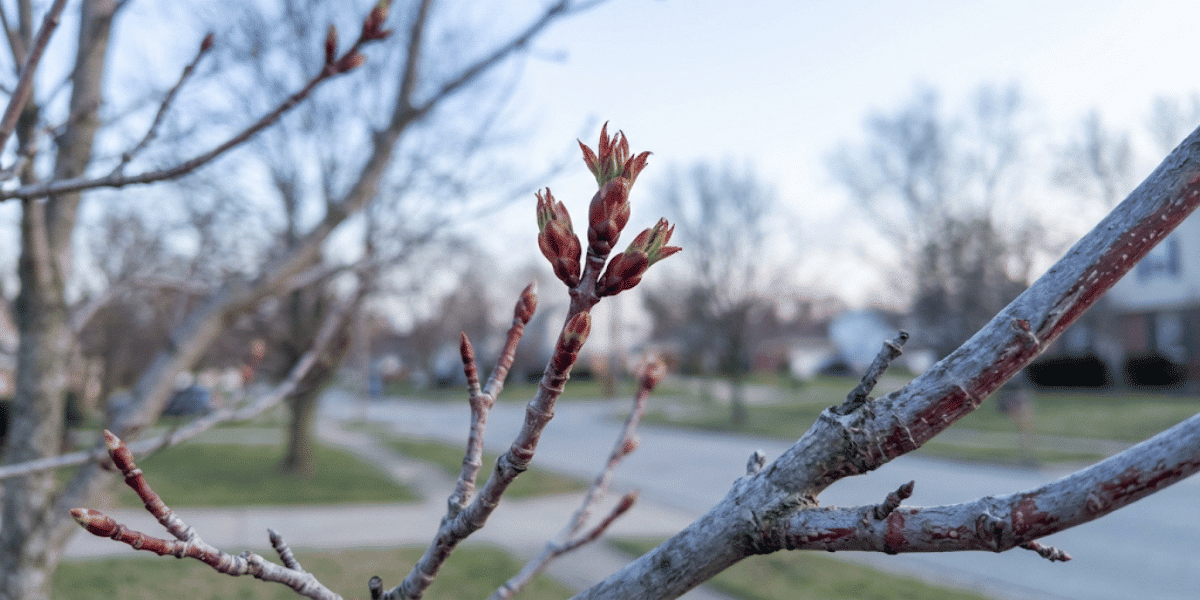
Both late winter and March through June are supported windows, so match timing to the size of the cut.
What Does a Maple Pruning Schedule Look Like?
There are two sourced windows for a maple pruning schedule, but they don’t agree on a single best one:
- Late Winter (February to March): This is generally regarded as the best time to prune most deciduous trees, and late winter into early spring is the common recommendation for Ohio.
- Spring to Early Summer (March to June): Many trees are best pruned in this window, when growth and callus formation are highest
Some experts also recommend not pruning maples in spring, so the right answer depends on the cut.
Frequently Asked Questions About Maple Trees
Why is my maple bleeding sap when I haven’t pruned it?
Sap flow, often called bleeding, is most commonly caused by pruning, injury, or stress.
Do I need to seal pruning cuts on a maple tree?
Not necessarily. Wound painting is no longer recommended, with one exception: in areas where oak wilt occurs, wound paint may help prevent insects from spreading the fungus.
How big is a large pruning cut?
A limb more than 3 inches in diameter where it meets the trunk is a typical example of a large cut. For these, the first cut goes about one foot out from the trunk.
Should I wait for spring to remove a hazardous maple limb?
No. Hazardous limbs should be removed at any time of year.
Lefke Can Plan Your Maple Pruning by Size and Season
At Lefke Tree Experts, our ISA Certified Arborists focus on large trees and hazardous limbs, so a big maple is the exact kind of job we’re set up for. We’ll look at your tree, recommend cuts that suit its size and the season, and use ground protection to keep your property safe while we work.
If an inspection indicates that pruning won’t help, we also handle tree removal. Learn more about our pruning and trimming services, or request an estimate online.